
Last updated October 15, 2026
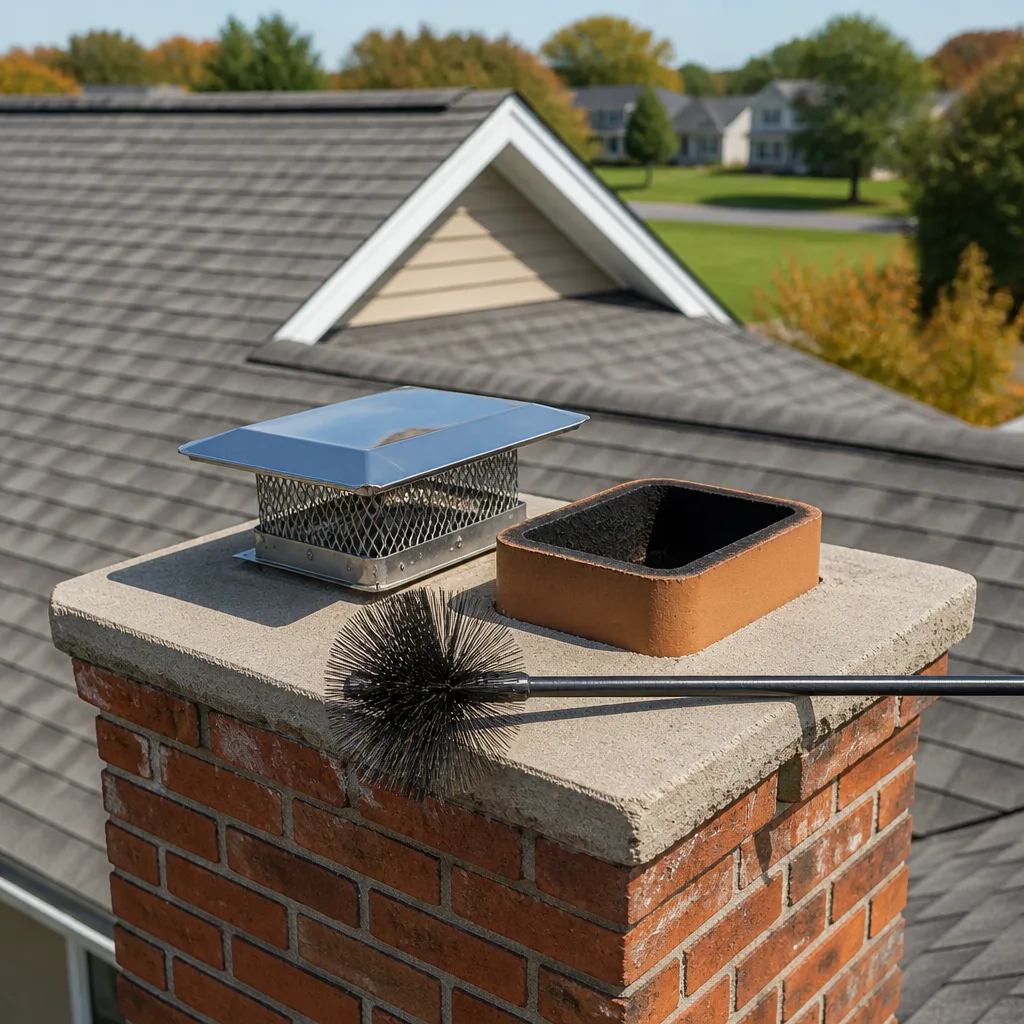 Sweep & inspection
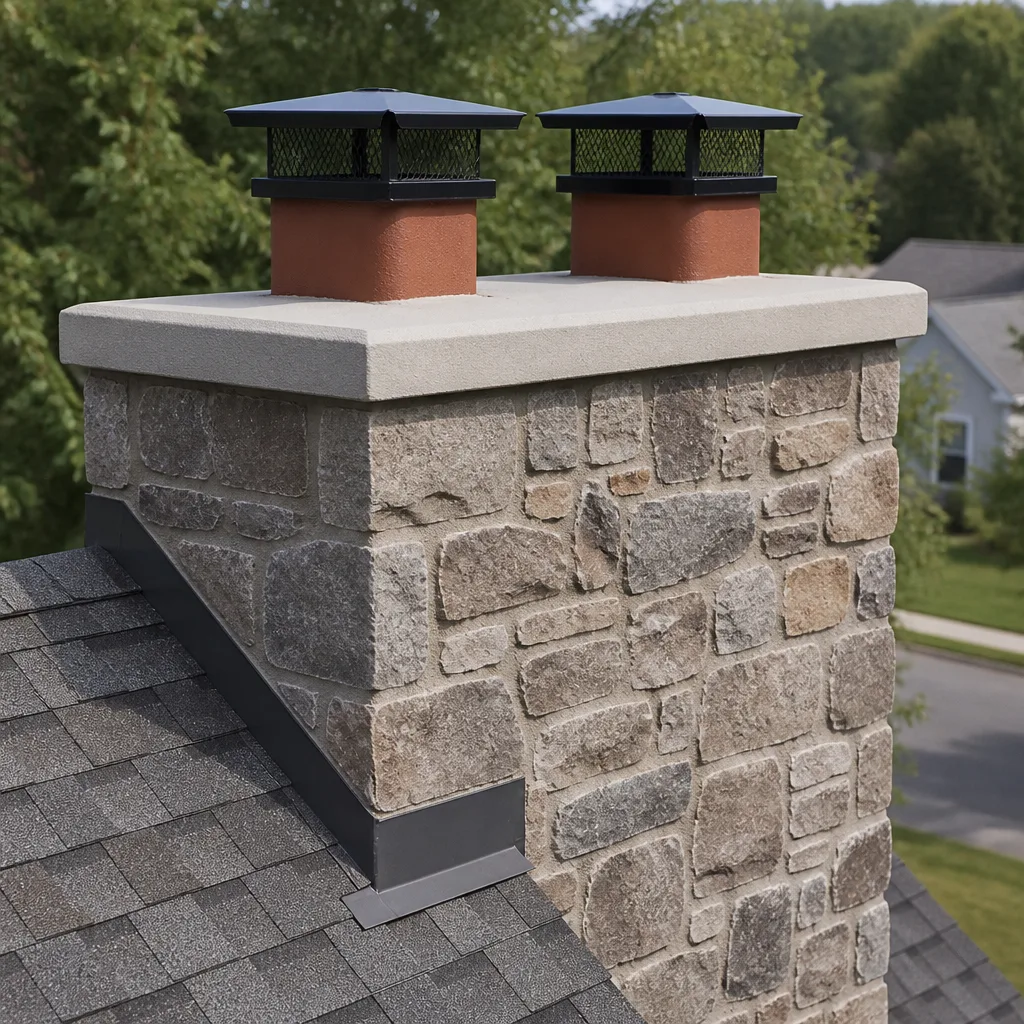 Caps & crowns
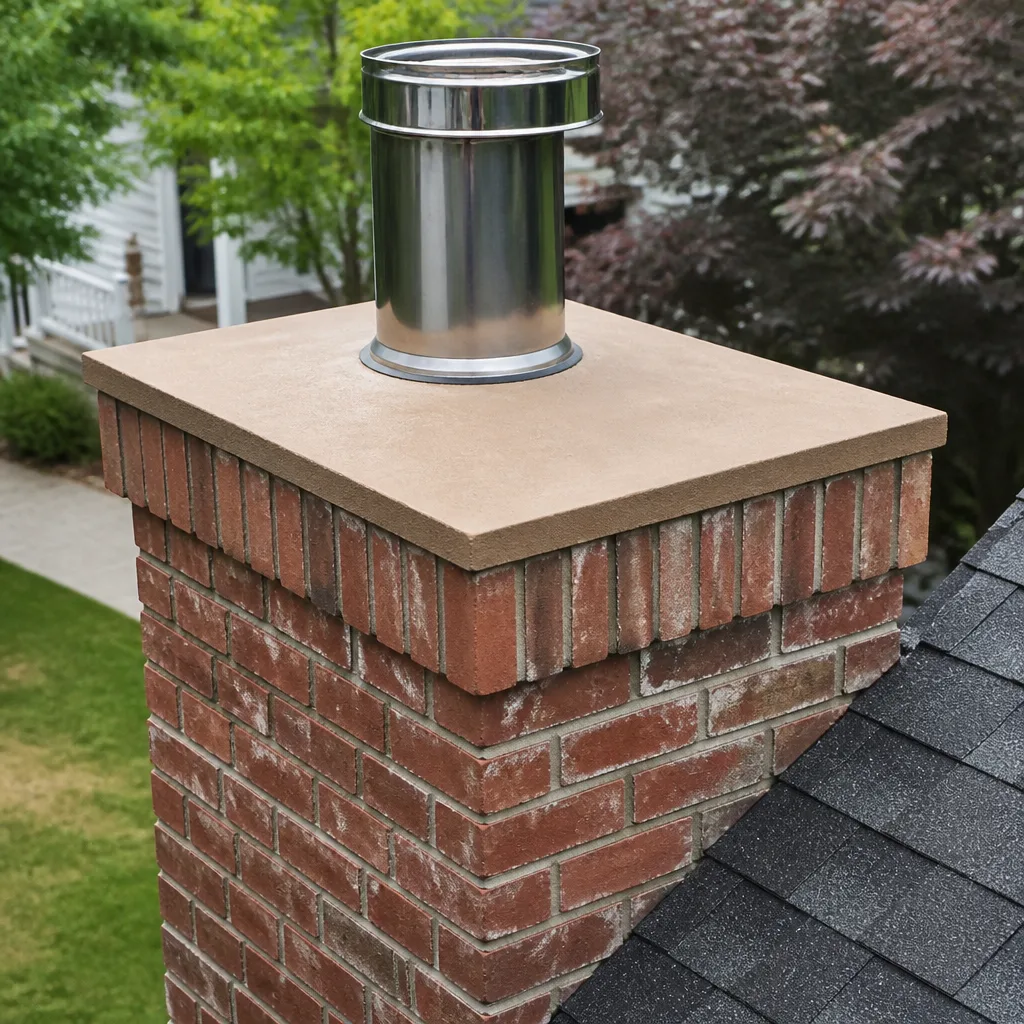 Flue relining
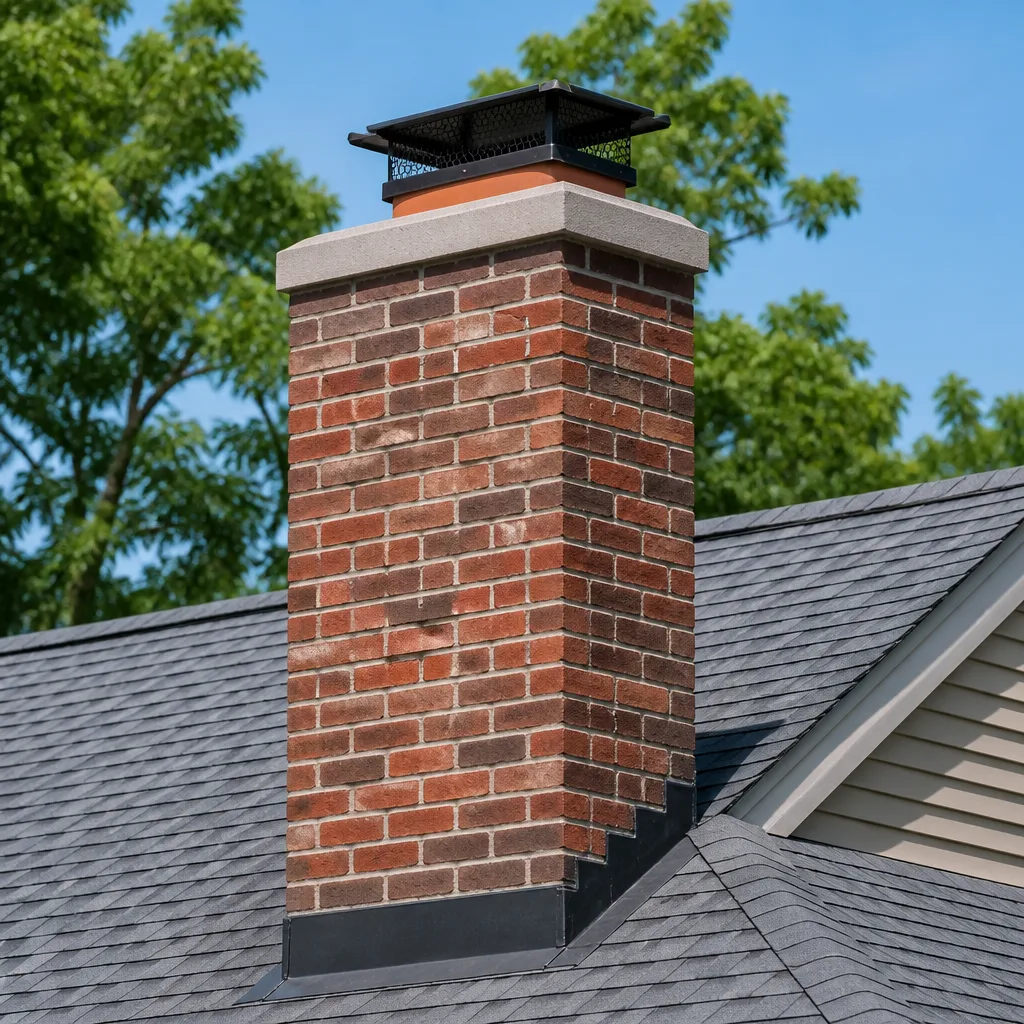 Masonry repair
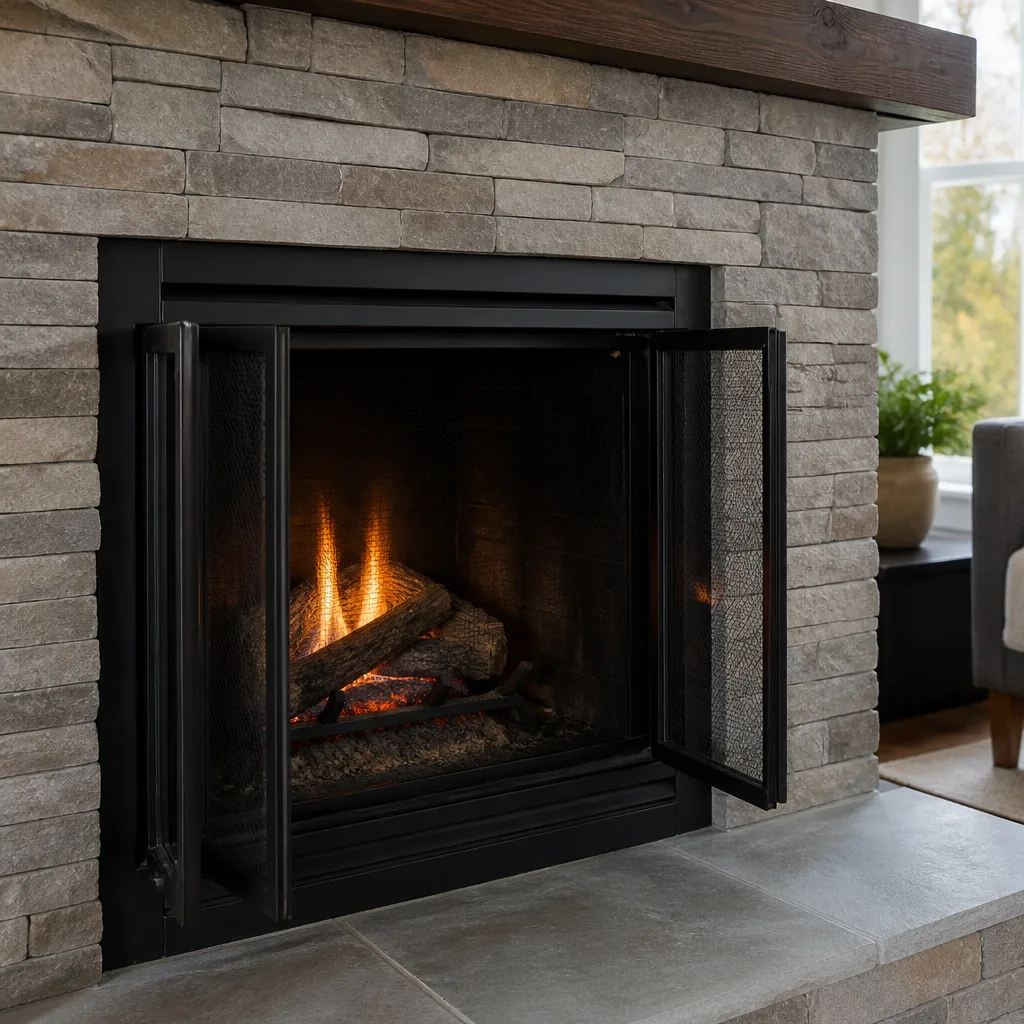 Gas fireplace service
Level 1 sweep and inspection to the NFPA 211 annual standard - flue, crown, cap, and flashing checked and photographed
Chimney sweep logs do not sweep chimneys. They loosen some creosote - which then falls where a brush and vacuum still have to collect it.
Chimney Cleaning Warning Signs: A San Antonio Homeowner’s Reference Guide
The white chalky streaks on the outside of your brick chimney aren’t a paint problem. They’re called efflorescence, and they’re your chimney’s way of showing you exactly where water is getting in. Most San Antonio homeowners see these streaks for years and do nothing, because the fireplace rarely gets used and the chimney feels like a decorative afterthought rather than a system that needs maintenance. That assumption is what turns a $250 sweep into a $4,000 liner job. This guide walks you through every warning sign that matters in San Antonio’s specific climate, what each one means in plain language, which ones are urgent, and how to document what you’re seeing before you call a sweep. For more, see our Complete Guide to Chimney Cleaning in San Antonio.
Styles & brands we work with
Quick Answer
Chimney warning signs in San Antonio break into four categories: water damage you can see from the ground (white staining, cracked concrete, spalling brick), smells that shouldn’t be there (musty odor in summer, smoky smell with the damper closed), dark buildup inside the firebox (shiny, oily creosote), and structural red flags (rusted damper, separated flashing at the roofline). If you see white chalk on the brick or smell smoke with the damper shut, call a sweep before you light another fire. Most issues are fixable for under $500 when caught early.
Table of Contents
- A Visual Dictionary of Chimney Warning Signs
- Smell-Based Warnings You’re Probably Dismissing
- Watch-and-Schedule vs. Don’t-Use-The-Fireplace
- San Antonio-Specific Warning Signs Other Guides Miss
- How to Photograph a Warning Sign Like a Pro
- What Happens When You Book a Sweep
- What Chimney Repairs Actually Cost in San Antonio
- Common Mistakes to Avoid
- When to Call a Professional
- Frequently Asked Questions
- The Bottom Line
A Visual Dictionary of Chimney Warning Signs
Chimneys don’t fail suddenly. They fail slowly, over years, and they announce each stage of failure on the brick, the cap, the crown, or the firebox. The problem is that most of these signs look like normal wear to anyone who doesn’t work on chimneys for a living. Here’s what each one actually means.
Efflorescence (White Chalky Staining on the Brick)
Efflorescence happens when water soaks into the chimney’s masonry, dissolves the natural salts inside the brick and mortar, and then evaporates on the surface, leaving the salts behind as a white, powdery residue. It’s not mold, and it’s not paint fading. It’s proof that water is moving through your chimney’s structure from the inside out. In San Antonio’s climate, where we get heavy spring rains followed by long dry stretches, efflorescence cycles can be aggressive. Each rain event pushes water deeper. Each dry spell pulls more salts to the surface. The white stain isn’t the problem. The water path it reveals is the problem.
Spalling Brick (Brick Faces Crumbling or Popping Off)
Spalling is what happens after years of efflorescence go unaddressed. Water trapped inside the brick expands and contracts with temperature swings, and San Antonio gets plenty of those, from July heat to the rare winter freeze. Eventually, the face of the brick pops off. You’ll see chunks of brick on the ground near the chimney base, or red dust accumulating on the roofline. This is a structural issue, not a cosmetic one. The chimney’s outer layer is its weather barrier. When brick faces start falling off, the interior masonry is exposed, and every rain event accelerates the damage.
Cracked Crown (The Concrete Slab on Top)
The crown is the slab of concrete or mortar that caps the top of the chimney. Its job is to shed water away from the flue and onto the roof. When it cracks, water flows directly into the chimney’s core. Hairline cracks are normal after 15 to 20 years of San Antonio sun exposure. Gaps wider than a quarter inch are not. If you can see cracks from the ground, or if the crown looks pitted or uneven, water is getting in. Crown repair typically costs less than the damage it prevents, which is the best kind of repair.
Rusted Damper (The Metal Flap Inside the Throat)
Open the damper and look up with a flashlight. If the metal plate or its hinges show rust blooms, water is reaching the inside of the chimney. A damper that’s stiff to open or close, or one that doesn’t seal fully when shut, is a sign the metal has warped or corroded. In practical terms, a failed damper lets conditioned air escape up the flue year-round, and it lets rain, humidity, and San Antonio’s summer heat pour down into the firebox. It’s also the single most common thing we replace that homeowners didn’t know could fail.
Dark Oily Stains in the Firebox
Inside the firebox, look for dark, glossy patches on the brick. That’s creosote, the flammable tar byproduct of wood combustion. First-stage creosote is flaky and brown. Third-stage creosote is shiny, tar-like, and hardened. If you see glassy black deposits inside the firebox or up the flue, you’re looking at a serious fire risk. Creosote ignites around 451°F, and a chimney fire can reach 2,000°F in seconds, cracking flue liners and melting metal components. The good news: a professional sweep removes it. The bad news: it returns with every cord of wood you burn, which is why annual sweeping is not a suggestion. This is also something we flag clearly in our Chimney Sweep in San Antonio service, since the buildup accumulates fastest in flues that only see occasional use.
Smell-Based Warnings You’re Probably Dismissing
Smells are the warning sign most San Antonio homeowners dismiss, because a faint odor isn’t as alarming as a visual cue. But smell tells you things the eye can’t reach.
Musty Odor in Summer
A musty smell coming from the fireplace during July and August is not normal. Fireplaces sit cold and unused all summer, and if they smell like a damp basement, water is sitting somewhere inside the chimney system. Common culprits in San Antonio are a cracked crown, a missing or corroded rain cap, or flashing that separated during a spring storm. The smell is organic material, often creosote or leaf debris, decomposing in moisture. It will not go away on its own, and it gets worse every time it rains.
Smoky Smell With the Damper Closed
If you smell smoke from a fire you burned three days ago, your damper isn’t sealing. A properly closed damper should block most airflow from the firebox. When smoke odors leak into the room, one of three things is happening: the damper is warped and no longer seats properly, the firebox has deeper airflow issues, or creosote inside the flue is off-gassing through gaps in the system. The fix starts with a damper inspection. Sometimes it’s a simple replacement. Sometimes it points to bigger airflow or liner issues. Either way, the smell isn’t just unpleasant, it’s diagnostic information.
The “First Rain” Smell
San Antonio gets intense rain events, and many homeowners notice a distinctive damp, sooty smell at the fireplace on the first rainy day after a dry stretch. That’s water hitting creosote or ash deposits inside the flue and releasing volatile organic compounds into the house. It means two things: water is getting in, and there’s enough creosote inside to warrant a sweep. Both are straightforward fixes when addressed early.
Watch-and-Schedule vs. Don’t-Use-The-Fireplace
Not every warning sign requires you to stop using the fireplace immediately. Some do. Knowing the difference prevents dangerous fires and prevents unnecessary anxiety.
Watch and schedule (safe to use, but book a sweep in the next few weeks):
- Light efflorescence on the brick face
- Hairline cracks in the crown (under 1/4 inch wide)
- A damper that’s stiff but still seals when closed
- Minor surface rust on the rain cap or flashing
- Flaky brown creosote deposits, light to moderate
Stop using the fireplace and call before the next burn:
- Glossy or tar-like black creosote inside the firebox or visible in the flue
- Visible smoke entering the room while the fireplace is lit
- Spalling brick with chunks falling away from the chimney
- Any gap between the flashing and the roofline wide enough to see daylight
- A strong smoky or musty odor that gets worse when wind blows outside
- Cracks in the crown wider than a quarter inch
When people ask us whether they should risk one more season, our answer is always the same: if the sign is water-related, you’re chipping away at the chimney’s lifespan every month you wait. If it’s creosote-related, you’re rolling dice on a chimney fire. The repair that would have cost a few hundred dollars becomes structural, and the term Chimney Repair in San Antonio stops meaning a patch job and starts meaning a rebuild.
San Antonio-Specific Warning Signs Other Guides Miss
Most chimney guides are written generically for the whole country. Some of the most important warning signs we see in San Antonio homes barely appear in those guides. For a local resource, see our Chimney Sweep Maintenance Checklist for San Antonio Homeowners.
Chimney Cap Corrosion From Humidity
San Antonio’s humidity doesn’t just make July uncomfortable. It accelerates rust on any metal component exposed to moisture, especially rain caps and spark arrestors. We regularly inspect caps that are five or six years old and already showing rust perforation. Once the cap rusts through, water enters the flue directly, carrying soot and creosote residue down into the firebox. Then birds and squirrels follow. If your cap looks brown instead of black or galvanized, it’s time. This is one of the most common reasons we recommend upgrading to stainless caps, which withstand San Antonio’s humidity far longer than painted steel.
Flashing Separation on Flat-Pitch Rooflines
San Antonio has a huge stock of homes built in the 1970s through the 1990s with shallow-pitch roofs. On these rooflines, chimney flashing works harder than on steep roofs. Debris accumulates against the uphill side. Water pools. The freeze-thaw cycle in winter, mild as it is, still expands and contracts the metal. After a decade or two, the flashing separates from the brick or the roof deck, and water tracks down the chimney chase. The warning sign is a gap you can see at the roofline, or water stains on the ceiling near the fireplace. Flashing replacement is a straightforward job, but it has to be done before water reaches the framing. Our technicians document flashing condition with photos on every inspection, because it’s the boundary where roof and chimney responsibility overlap, and homeowners deserve to see exactly where the problem sits.
Summer Creosote Setting
Creosote in San Antonio behaves differently than it does in colder climates. The heat of July and August bakes creosote inside the flue, hardening it into a glazed, shell-like layer. This hardened creosote is far harder to remove than the flaky type, and it burns hotter if ignited. Homes that burn fires only occasionally and skip the off-season sweep are the most vulnerable, because first- and second-stage creosote is left inside the flue all summer, heat-curing into the dangerous third stage. If you burned wood last winter and haven’t had the flue checked, doing it in early fall, before burning season, matters more in San Antonio than in most markets.
How to Photograph a Warning Sign Like a Pro
One thing that sets modern chimney care apart is documentation. A homeowner who sends us photos before the visit helps us come prepared with the right materials, and it usually means a faster diagnosis. Here’s how to get the shot that actually helps.
- Stand back and get context first. Take one wide photo of the full chimney from the ground, so the technician can see the chimney’s height, position on the roofline, and surrounding roofline geometry.
- Zoom in on the specific sign. Whether it’s efflorescence, a crack, or flashing separation, get the closest stable shot your phone allows. Tap the screen to lock focus.
- Add a reference object. Hold a coin or a key next to a crack so the technician can judge scale from the photo. A quarter shows whether a crack is a hairline or a quarter-inch gap.
- Shoot from two angles. One straight-on, one from the side. Side angles show depth, especially on flashing gaps and crown cracks.
- Go inside. Photograph the firebox, the damper, and any staining on the walls or ceiling near the fireplace. Interior staining tells a story about where water travels after it enters.
- Send them before the visit. Hadley’s live arrival tracking already gives you a real-time window, and when the technician sees your photos beforehand, he can often quote more accurately before he even climbs the ladder.
We see this as the minimum standard for a modern service call. You don’t have to understand what you’re photographing. You just have to point the camera at what looks wrong. The technician handles interpretation.
What Happens When You Book a Sweep
Most San Antonio homeowners have never booked a chimney service before, and they don’t know what to expect. Here’s the process, step by step, so there’s no ambiguity.
- Call and talk to a person. Hadley answers every call with a live human, 24/7. No voicemail tree, no callback queue. You describe what you’re seeing, and we help you decide whether it’s a “schedule it” situation or a “don’t burn until we see it” situation.
- You get a written price before anyone starts work. Not a verbal quote, not a range that changes at the door. A written price, every time. If additional work is needed beyond the original scope, you approve it at a written price before any extra work is done.
- Your technician arrives in a tracked window. You’ll get live arrival tracking, the way you’d track a rideshare. You know who is coming, and when, before they show up. Every Hadley technician is background-checked and uniformed.
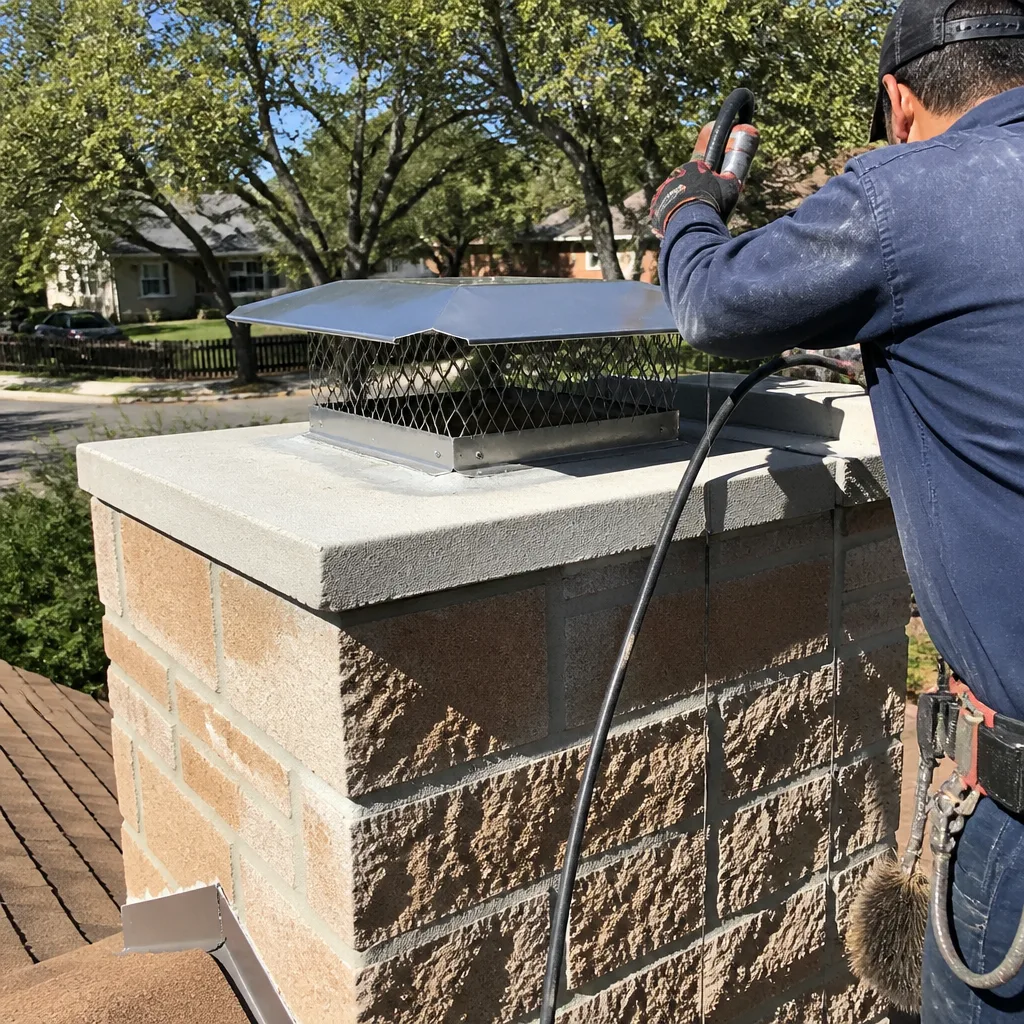
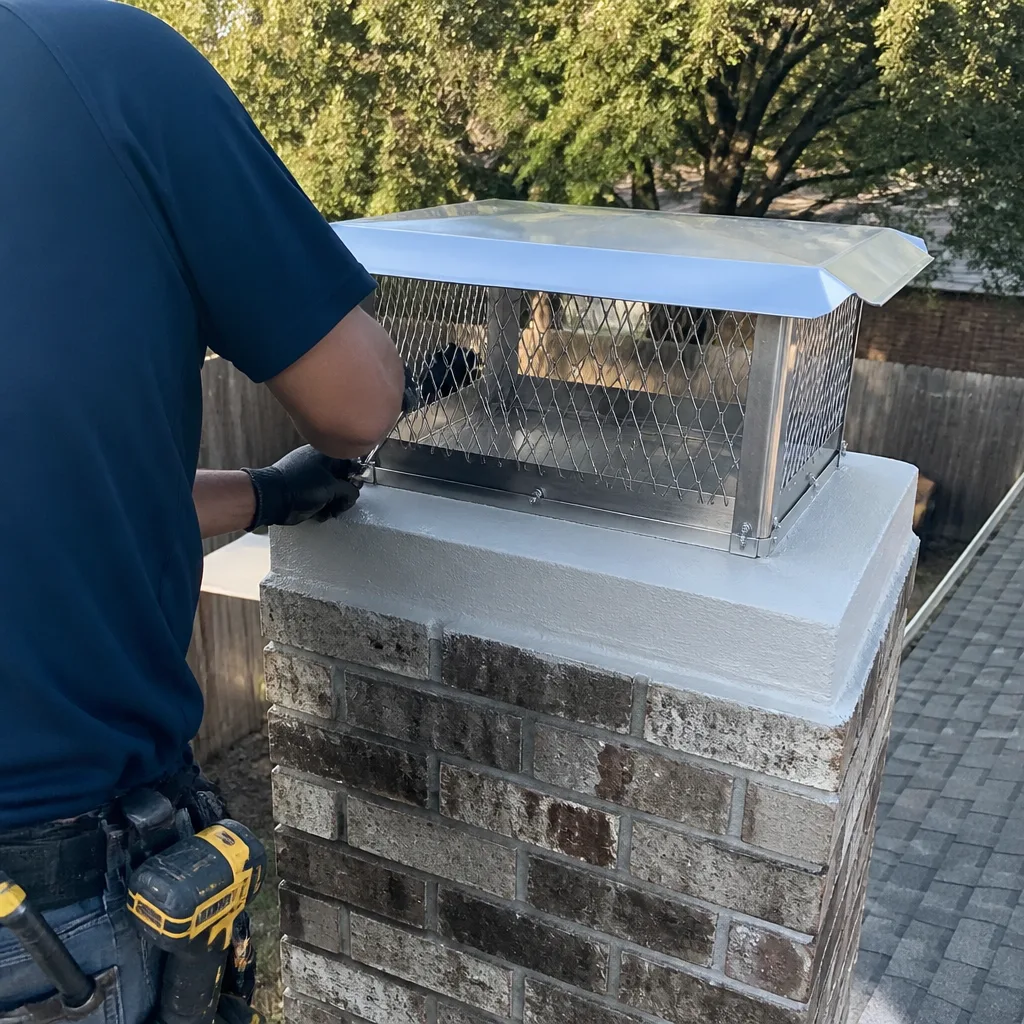
- The inspection happens at eye level, with photos. The technician examines the cap, crown, flashing, flue, damper, and firebox. Photos document the condition before, during, and after the work. You’ll see exactly what the technician saw.
- You get the repair recommendation with photo evidence. If the sweep finds a cracked crown or separated flashing, you’re shown the photo. Nothing gets recommended that you can’t verify with your own eyes.
- You pay from a digital invoice. A link arrives on your phone. No checks, no paper, no surprises. And every chart of repairs carries a written guarantee, backed by the 365-Day Done Right Promise. If the repair fails within 365 days, the follow-up visit is free.
That’s the process. It reflects The Relay Visibility Guarantee, which is the standard every job is held to: live arrival tracking, before-and-after photo documentation, and a written price before work begins. It’s what we mean when we say Hadley Chimney San Antonio home services are built on transparency, not trust falls.
What Chimney Repairs Actually Cost in San Antonio
Chimney repair pricing is one of the most opaque areas in home services, and that opacity is how homeowners get quoted $3,000 for a job that should cost $400. Here are the ranges we see in San Antonio, and what drives the price.
| Service | Typical San Antonio Range | Notes |
|---|---|---|
| Chimney sweep (standard, no major issues) | $180 – $340 | Most San Antonio homes fall here |
| Chimney inspection (Level 1) | $120 – $250 | Often bundled with a sweep |
| Damper replacement | $250 – $600 | Depends on access and damper type |
| Crown repair (crack fill, sealant) | $300 – $800 | Full crown rebuild runs higher |
| Flashing repair or replacement | $400 – $1,200 | Depends on roof pitch and chase height |
| Rain cap or spark arrestor replacement | $150 – $450 | Stainless steel runs higher but lasts |
| Chimney liner replacement (stainless flex) | $1,800 – $4,500 | Depends on flue height and diameter |
These are ranges, not quotes. Your actual number depends on what the inspection finds. But you should never get a recommendation for a liner, a crown rebuild, or masonry work without seeing the photographic evidence that justifies it. That standard is non-negotiable in our process, and it’s one reason we never recommend work the flue doesn’t actually need. A chimney can safely serve a San Antonio home for decades, with proper annual sweeps and prompt attention to the warning signs above.
Common Mistakes to Avoid
- Ignoring efflorescence because it’s “just cosmetic.” White staining is a field marker for an active water path. It never means the chimney is fine, and the damage compounds every season in San Antonio’s rain-and-heat cycles.
- Burning one more season before scheduling a sweep. Creosote isn’t patient. A hot fire on a bed of third-stage creosote can ignite a chimney fire in seconds. If you see glassy black deposits, don’t roll dice.
- Sealing cracks with store-bought masonry caulk. Caulk is a waterstop, not a structural repair. It traps moisture inside the brick instead of letting it evaporate, which accelerates spalling in San Antonio’s humid climate.
- Hiring on price alone. A $99 sweep special often becomes a $600 upsell on the roof. If a price seems too low, ask what the written scope includes before the technician arrives. Then ask again in writing.
- Ignoring the damper. Homeowners treat the damper as a fixed part of the fireplace, but it’s a wear component. A warped damper costs you money every month in escaped conditioned air, and it’s the most common source of smoky smells.
- Relying on the home inspector’s chimney note. Home inspection reports usually say “recommend chimney evaluation” and move on. That’s not an inspection. It’s a flag. A dedicated chimney professional sees what the inspector’s 20-minute walkthrough can’t.
- Skipping the post-summer sweep. A full San Antonio summer of heat and humidity changes the chemistry of the creosote in your flue. Spring-accumulated creosote becomes fall fire risk. Annual sweeping in early fall, before the first burn, is the rhythm that works here.
When to Call a Professional
Call a professional when you see any of the warning signs above, but especially when you see more than one. A single white stain might be minor. A white stain plus a musty smell plus a stiff damper is a pattern, and patterns mean a system-level water or airflow problem is already underway. If you’re unsure whether what you’re seeing matters, the answer is always to ask someone who looks at chimneys for a living, not to guess. Hadley Chimney San Antonio offers free estimates in San Antonio, and the call takes five minutes. You’ll talk to a live person, describe what you see, and get a straight answer. Call (254) 276-4116. If you have a gas fireplace instead of wood-burning, the same standards apply to Gas Fireplace Repair in San Antonio, since gas systems have their own set of safety and maintenance warning signs that deserve the same visibility.
Frequently Asked Questions
Once a year, ideally in early fall before burning season starts. San Antonio’s summer heat bakes creosote inside the flue, hardening it into a glassy layer that’s harder to remove and more dangerous if ignited. Annual sweeping keeps creosote from accumulating to dangerous levels, and the fall timing means your fireplace is ready for the first cold front without a last-minute scramble. If you burn more than three cords per winter, consider a mid-season check. Call (254) 276-4116 to schedule a sweep before the season.
Efflorescence means water is moving through your chimney’s masonry. The white powder is salt left behind when water evaporates from the brick face. It’s a symptom of water entry, not a standalone problem. The source is usually a cracked crown, failed flashing, or porous brick that needs sealing. The fix starts with identifying where water enters and addressing that point, rather than scrubbing the stain. If you’re seeing white chalk on your brick, call for an inspection before the next big rain.
Sometimes, but never on a recommendation you can’t verify. A flue liner needs replacement when it’s cracked, separated, or deteriorated to the point that heat or combustion gases can reach the surrounding masonry. In San Antonio, liners also fail from moisture intrusion that corrodes them from the inside out. The recommendation should always come with photo evidence you can see for yourself. A liner that’s still intact and serviceable doesn’t need replacing, no matter what a sales script says. Hadley uses brands like Copperfield and DuraFlex when liners do need replacement, and every liner recommendation is backed by camera documentation.
You can, but you shouldn’t. A proper sweep involves flue brushes, specialized rods, high-power vacuums with HEPA filtration, and a detailed inspection of the cap, crown, flashing, and liner. It also requires getting on the roof safely, which on many San Antonio rooflines means working at height with the right fall protection. The DIY kits sold at hardware stores remove loose creosote but can’t inspect for cracks, and won’t catch the structural issues that matter most. See our DIY vs Professional Chimney Cleaning: The San Antonio Homeowner’s Decision Guide for a full comparison. For a through service, call a professional at (254) 276-4116.
Summer smoky smells from a cold fireplace usually mean the damper isn’t sealing fully, allowing flue gases and creosote odor to drift down into the house. The smell can also come from creosote deposits inside the flue off-gassing in heat. A damper replacement or a flue cleaning typically resolves it. The longer-term fix is making sure the damper seats properly, and if the damper is warped, replacing it before burning season.
A standard chimney sweep in San Antonio typically runs $180 to $340. The price depends on flue height, creosote stage, accessibility, and whether the home has any unique roofline conditions. Hadley provides a written price before any work starts, so you’ll know the exact number before the technician picks up a brush. Call (254) 276-4116 for a free estimate.
The Bottom Line
Chimney warning signs are easy to ignore because they don’t look dangerous. A white stain, a faint smell, a stiff damper, a little rust on the cap. None of these feels urgent until the repair bill arrives. But each sign is information, and the chimney gives you that information years before failure if you’re paying attention. The smart move in San Antonio’s climate is an annual sweep, photographic documentation of what you find, and a repair response that matches the evidence. You don’t need to be a chimney expert. You just need to know what to look at, and when to call someone who does. Explore more guides & resources on chimney care.
Written by Cory Mitchell, Owner at Hadley Chimney San Antonio, serving San Antonio since 2003.
See the difference
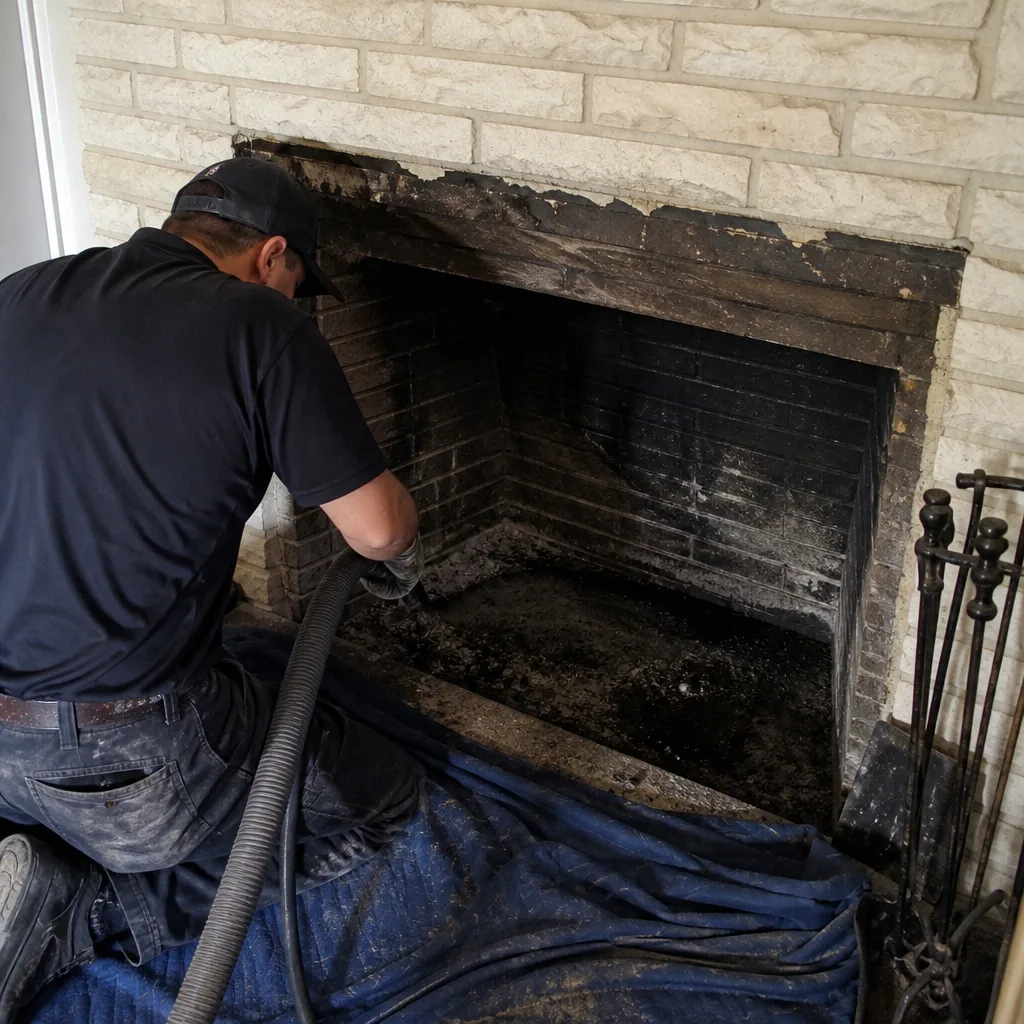 Before
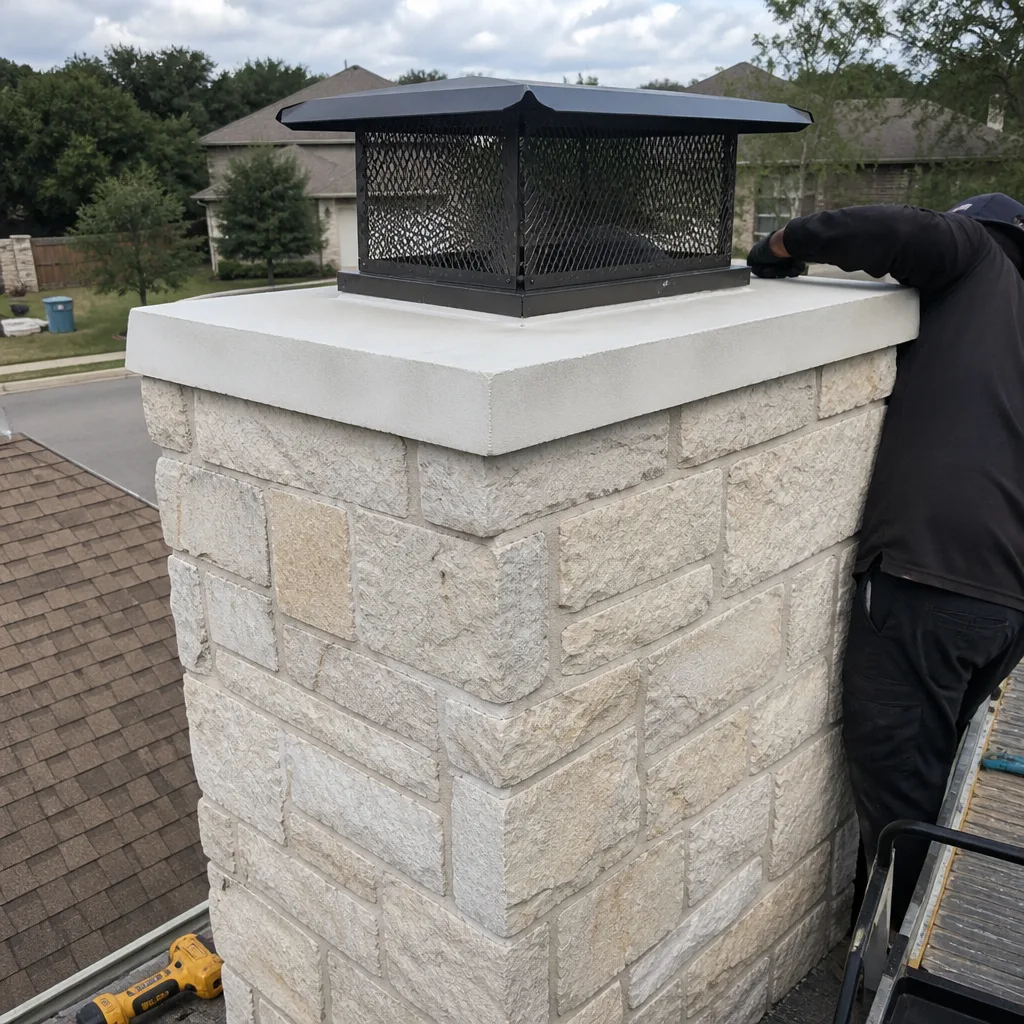 After
After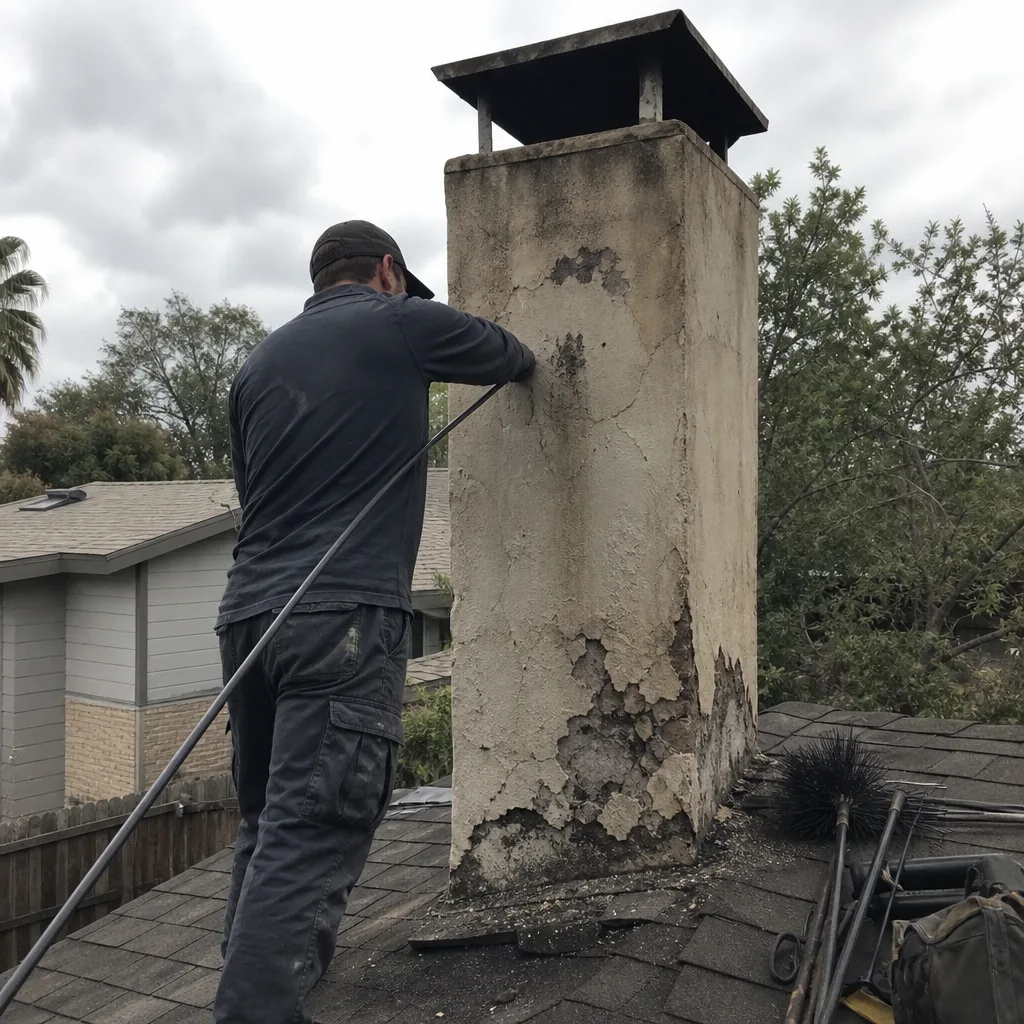 Before
 After
After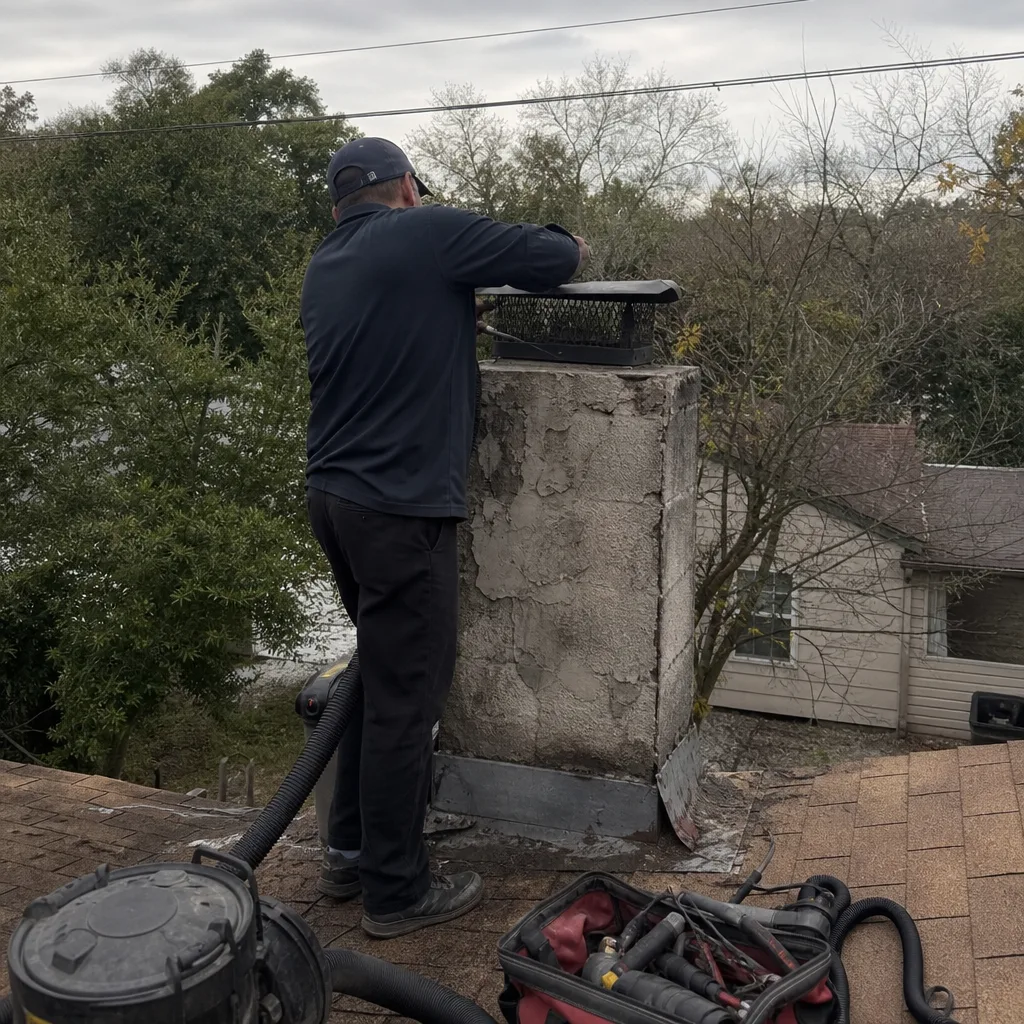 Before
 After
After