
Last updated October 15, 2026
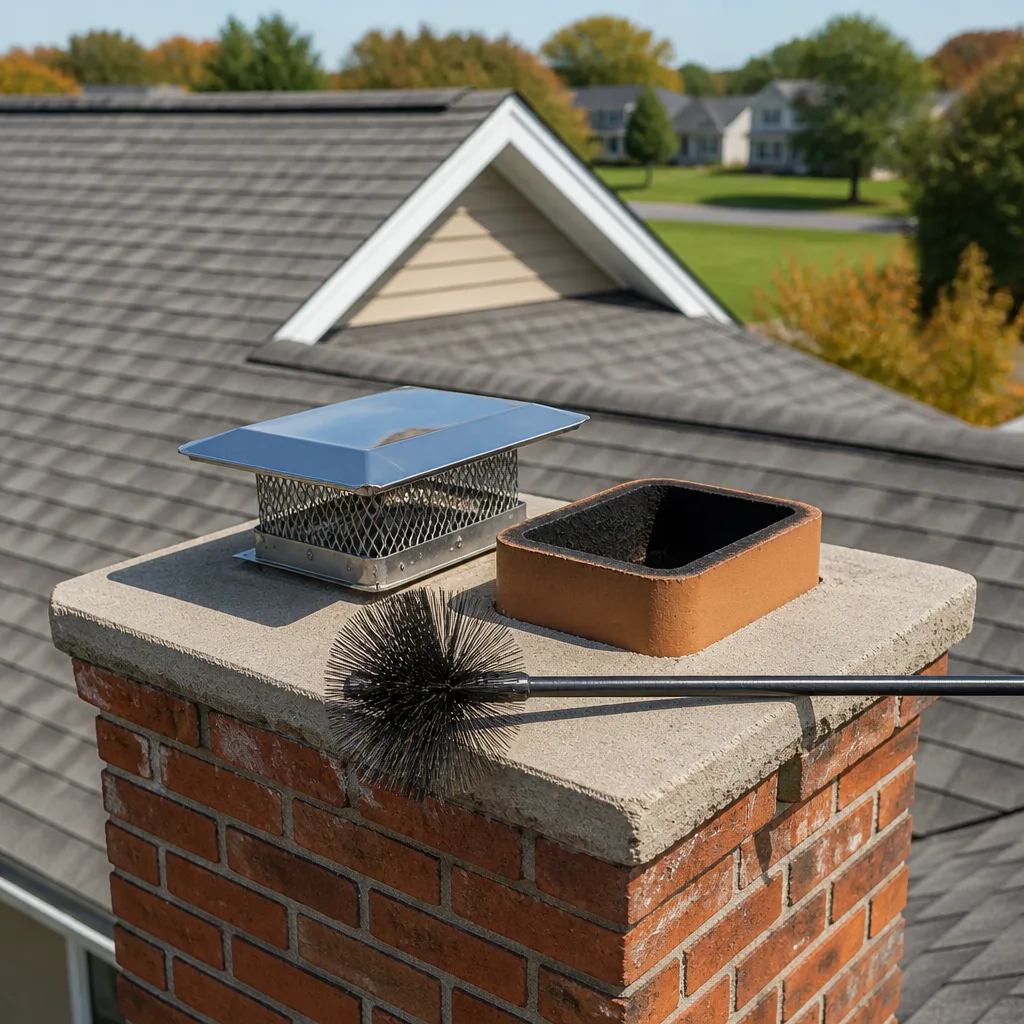 Sweep & inspection
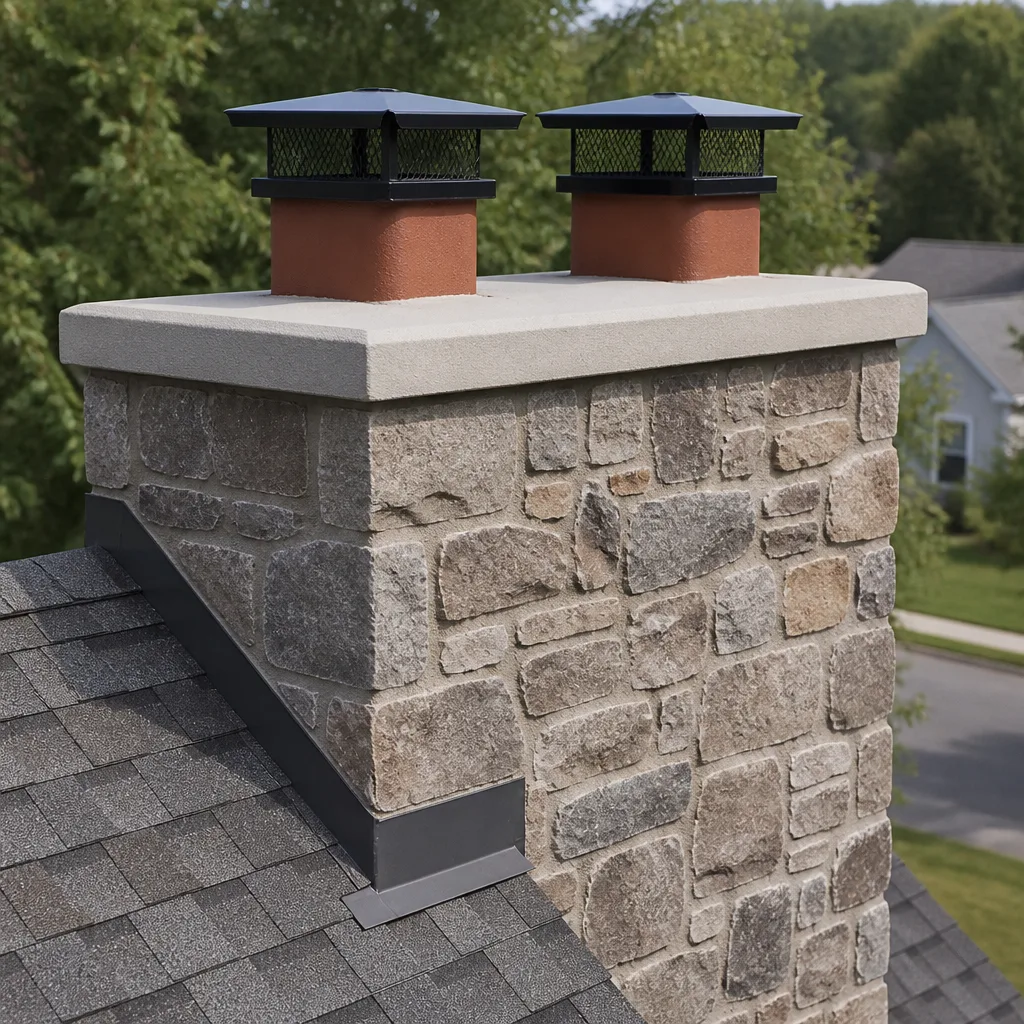 Caps & crowns
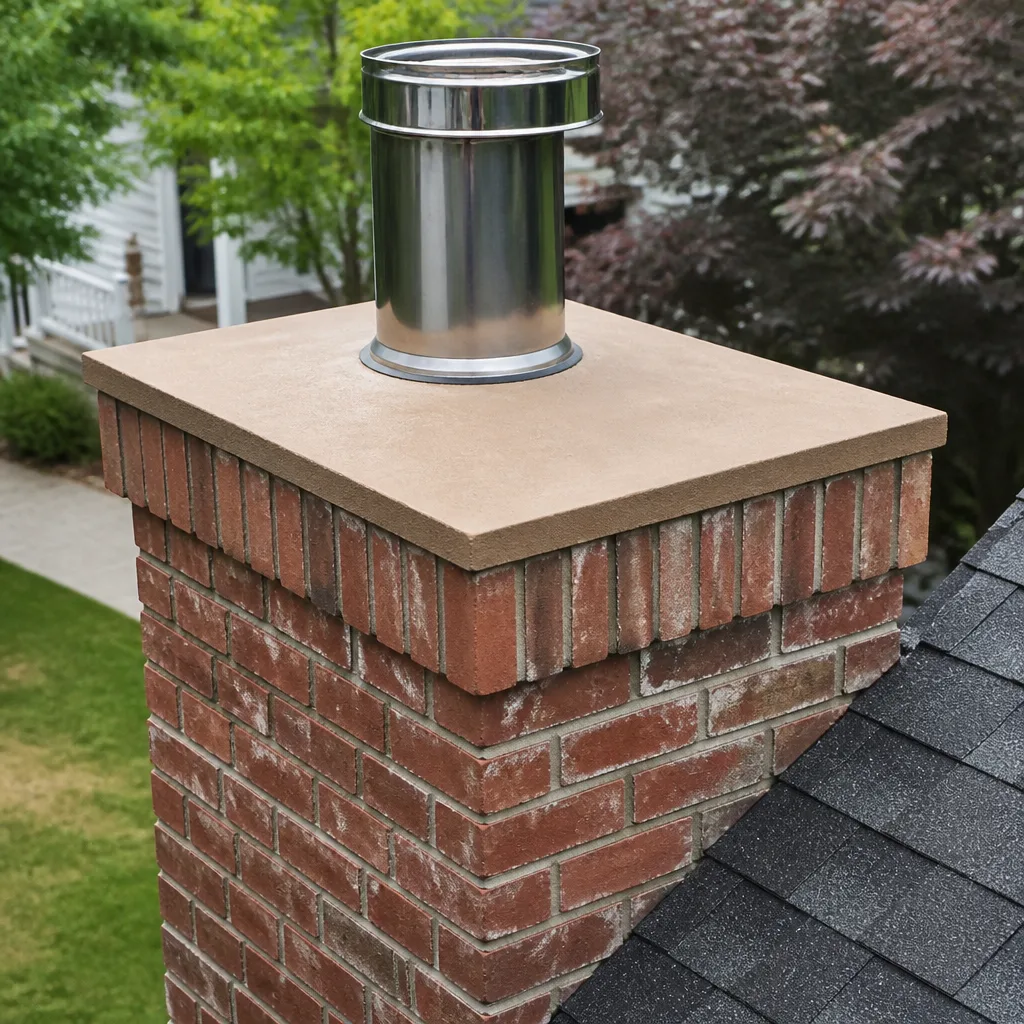 Flue relining
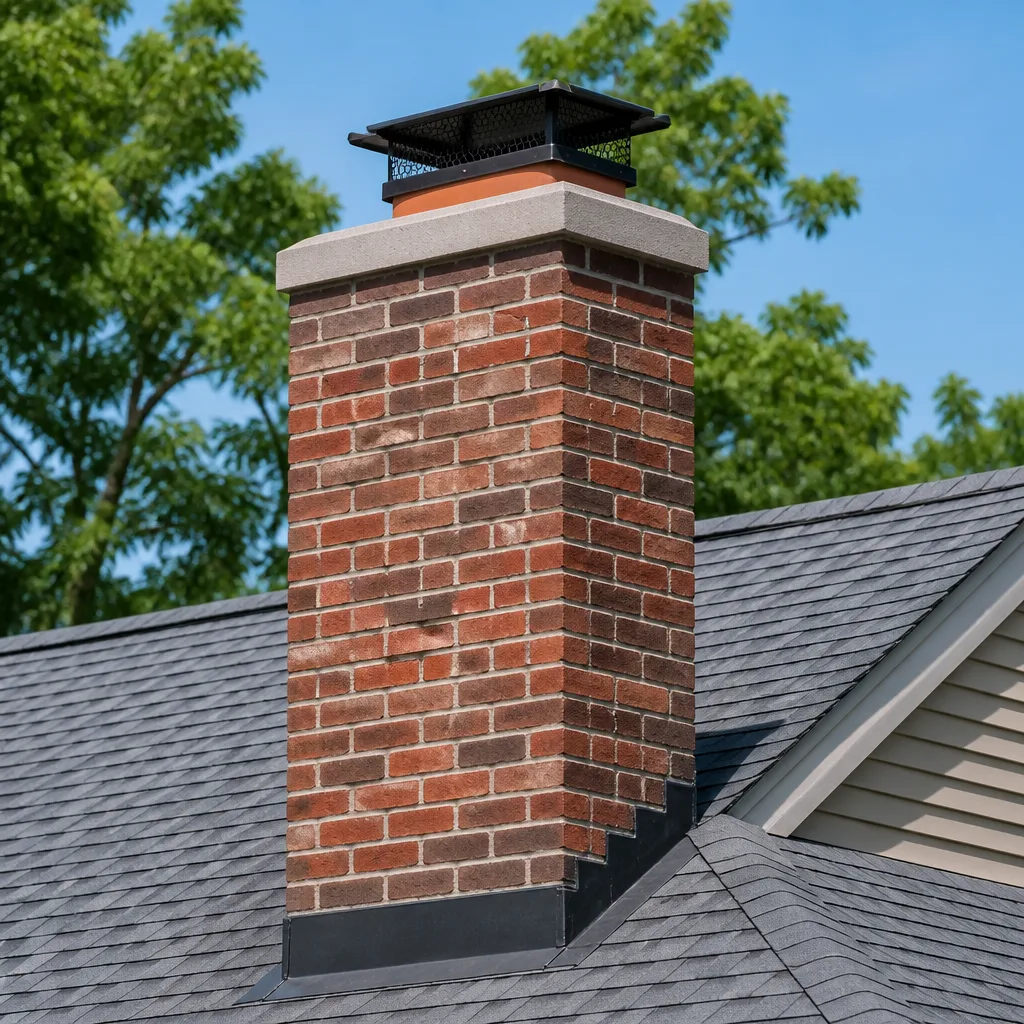 Masonry repair
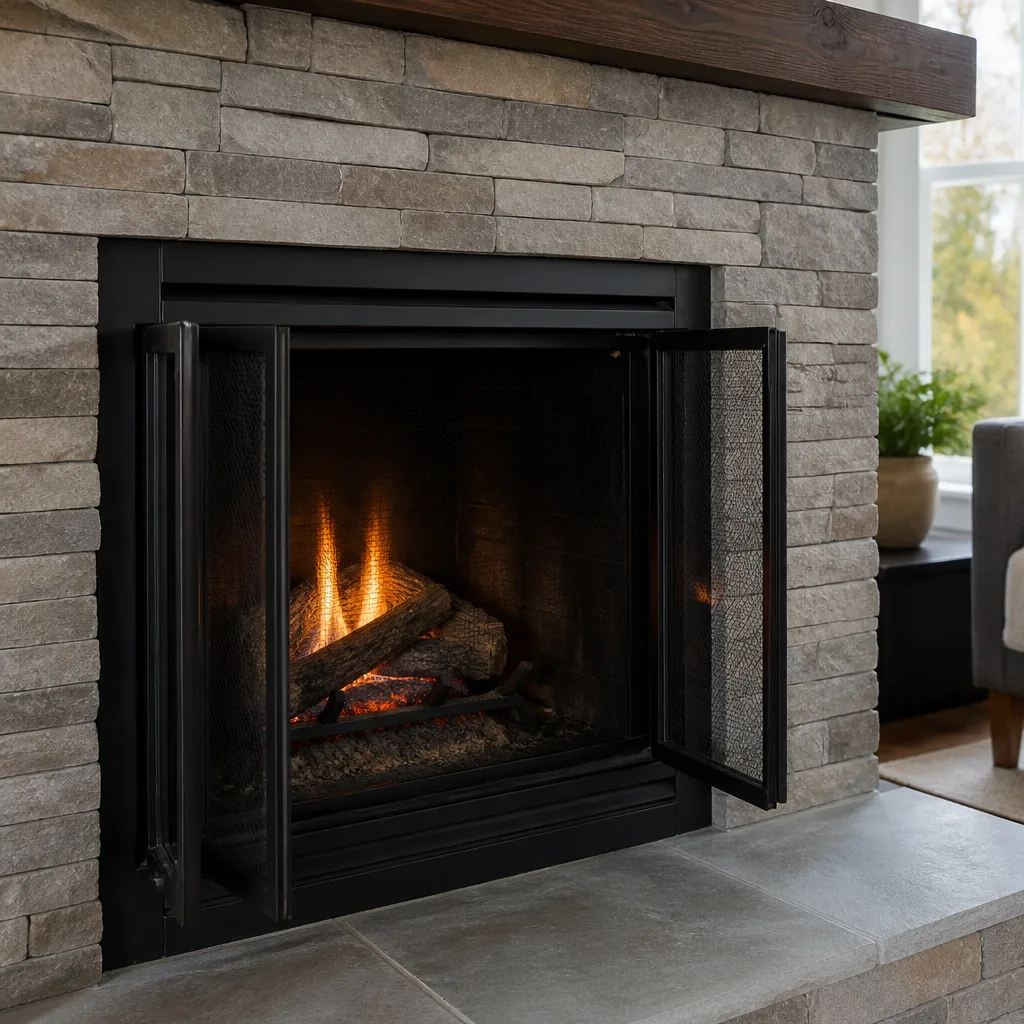 Gas fireplace service
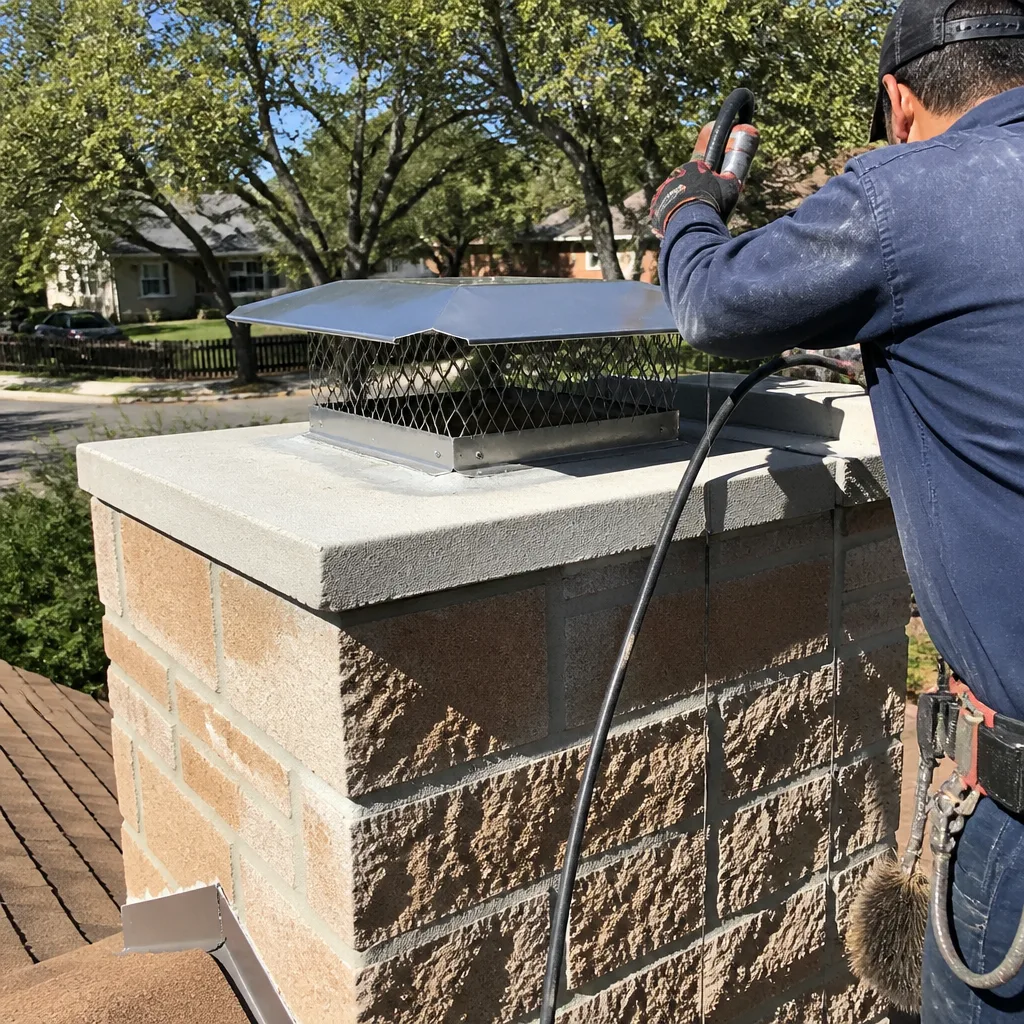
Level 1 sweep and inspection to the NFPA 211 annual standard - flue, crown, cap, and flashing checked and photographed
Chimney sweep logs do not sweep chimneys. They loosen some creosote - which then falls where a brush and vacuum still have to collect it.
Chimney Sweep Maintenance Checklist for San Antonio Homeowners
If your chimney checklist just says “inspect annually,” it’s not a checklist. It’s a calendar note. Here’s the thing most San Antonio homeowners don’t realize: your chimney gives you observable evidence of its condition year-round. You don’t need to wait for a scheduled reminder to know something’s wrong. A white stain on the brick outside, a smoky smell in the living room during August, a damper that won’t fully close. These are data points. This guide walks you through what to look at, what each finding means, and which items you can handle yourself versus which ones need a Chimney Sweep with a camera. By the time you finish reading, you’ll have a working maintenance system built around evidence you can see, smell, and photograph, not vague calendar reminders.
Quick Answer
A practical chimney maintenance checklist for San Antonio homeowners starts with a room-by-room visual inspection: check the firebox for dark oily residue, test the damper, look for white staining (efflorescence) on exterior brick, photograph the cap and crown from the ground with your phone, and log everything in a simple tracker. Then book a professional sweep once a year, or after roughly 50 burns, whichever comes first. Most sweeps in San Antonio run $150 to $300, and the written report you get back tells you what needs fixing and what can wait.
Styles & brands we work with
Table of Contents
- The Firebox Check: What You Can See From Inside
- Smell, Stains, and Sounds: Sensory Signals Your Chimney Sends
- DIY-Safe vs. Certified-Sweep-Only: Where the Line Is
- The Phone Camera Inspection: Cap, Crown, and Flashing
- The Chimney Tracker: A One-Page Log to Share With Your Sweep
- San Antonio-Specific Factors: Climate, Creosote, and Code
- What a Chimney Sweep Costs in San Antonio
- How Often Should You Actually Sweep?
The Firebox Check: What You Can See From Inside
Before you ever climb a ladder or pay for a roof inspection, start inside. The firebox, that’s the chamber where the fire actually burns, tells you more about chimney health than almost anything else. Grab a flashlight and get down at eye level. What you’re looking for is evidence of how your last fire behaved.
First, check for dark, oily residue on the firebox walls and on the damper plate above. That substance is creosote, a flammable tar byproduct that forms when wood smoke cools and condenses. A thin dusting is normal. A thick, shiny, or flaky buildup is not. In our experience across San Antonio homes, creosote accumulation happens faster than homeowners expect, especially with oak and mesquite, which burn hot but produce heavy smoke. If you can scrape off more than an eighth of an inch with a fingernail, you’re due for a sweep.
Second, test the damper. It should open and close smoothly, and when closed, it should form a reasonably tight seal. Hold your hand near the damper opening when it’s closed. If you feel air moving, that means your damper is letting conditioned air escape into the flue all year long. That’s not just a chimney issue, it’s an energy bill issue. San Antonio summers are hot enough without your air conditioning leaking up the chimney.
Third, use your phone’s flashlight to look up into the smoke chamber, that angled section above the firebox that funnels smoke into the flue. You won’t be able to see the full flue liner, but you can spot obvious problems: missing mortar joints, cracked firebrick, or debris that’s fallen down from above. If you see what looks like sand or small stones at the bottom of the firebox, that’s often spalling, which means the flue liner is deteriorating from the inside.
Here’s a simple checklist for the firebox scan:
- Shine a light on the firebox walls and look for shiny or flaky creosote (more than 1/8 inch means sweep time).
- Open and close the damper fully. It should move without grinding or sticking.
- With the damper closed, feel for air movement around the edges.
- Look up into the smoke chamber for missing mortar, cracks, or debris.
- Check the firebox floor for sand-like granules, a sign of liner deterioration.
This entire sequence takes about ten minutes. It doesn’t require any tools beyond a flashlight and your eyes. But it tells you more about what’s happening inside your chimney than a generic “annual reminder” ever will. And when you do call a sweep, you’ll be able to describe exactly what you saw. That’s the difference between a vague conversation and an informed one.
Smell, Stains, and Sounds: Sensory Signals Your Chimney Sends
Chimneys communicate before they fail. The problem is that most homeowners don’t recognize the language. Once you know what to pay attention to, you’ll start noticing signals that were always there. And in San Antonio’s specific climate, some of these signals appear differently than they do in other parts of the country.
Smoke smell in summer. This is a big one, and it’s strangely common in San Antonio. You walk into your living room in July, the fireplace hasn’t been used in five months, and you catch a faint campfire smell. That’s not nostalgia. It’s a downdraft. When outside air is warm and humid, and your air conditioner is running, the pressure inside your home drops slightly. That pressure difference pulls air down the chimney and into your living space. The smell is creosote off-gassing. A properly sealed damper helps, but the real fix is often a chimney cap with better airflow design or addressing a liner with heavy creosote deposits.
White staining on exterior brick. If you see a white, chalky film on the brick near the chimney, especially on the chimney chase or around the roof line, that’s efflorescence. It happens when water migrates through the masonry and evaporates, leaving behind mineral deposits. In San Antonio, we get intense rain bursts followed by long dry spells, which is exactly the weather pattern that produces visible efflorescence. The stain itself isn’t structural damage. But it’s evidence of water penetration, and that means your masonry is absorbing moisture it shouldn’t be. Left unaddressed, that leads to spalling, cracking, and in bad cases, mortar joint failure.
Dark oily residue on the damper handle. When you reach up to open the damper and your fingers come back with a black, sticky film, that’s not soot. That’s unburned creosote condensation. It means the smoke from your fires is cooling too quickly inside the flue, and the creosote is condensing on metal surfaces instead of exiting the chimney. This often happens when fires are burned too cool (like a smoldering fire overnight) or when the flue is oversized for the fireplace, which is common in older San Antonio homes that were built before modern fireplace efficiency standards.
Scratching or fluttering sounds. Birds, squirrels, and raccoons all have a habit of finding their way into uncapped chimneys. A chimney cap with a spark arrestor screen keeps them out. If you hear scratching in the chimney, you likely have an animal visitor. Beyond the noise, animal nests are a genuine fire hazard. A squirrel nest in the flue blocks airflow, which pushes smoke back into the home. And a bird nest in the smoke chamber is essentially kindling sitting directly above your firebox.
None of these signals require you to climb onto the roof. They’re all observable from inside your home or from the ground outside. That’s the point of this checklist: you don’t need to be a chimney professional to gather evidence. You just need to know what evidence looks like.
DIY-Safe vs. Certified-Sweep-Only: Where the Line Is
There’s a line between what a homeowner can safely do and what genuinely requires a trained professional. Drawing that line clearly is important. Too many homeowners either avoid touching their chimney entirely (which means problems go unnoticed) or they attempt things they shouldn’t (which creates new problems). Here’s the distinction.
DIY-safe items:
- Clearing loose debris from the firebox floor using a shop vacuum with a HEPA filter. Ash and small bits of soot are fine to remove yourself. Wear a dust mask, and make sure the firebox is completely cold before you start.
- Visually inspecting the firebox, damper, and smoke chamber with a flashlight, exactly as described in the first section.
- Checking the exterior brick for efflorescence, cracks, or missing mortar from ground level.
- Photographing the chimney cap, crown, and flashing with your phone from as many angles as you can safely reach with a ladder you’re comfortable on. Never climb onto the roof itself.
- Logging observations in a chimney tracker document so you have a record to share with your sweep.
Certified-sweep-only items:
- Flue liner inspection. A proper liner inspection requires a camera system that can see the entire length of the flue, from the smoke chamber to the top of the chimney. Minor cracks and early-stage deterioration are invisible to the naked eye from below.
- Smoke chamber assessment. The smoke chamber is the angled area above the firebox, and it’s a common source of heat transfer into the home’s structure. A professional can determine whether the chamber needs parging (smoothing the surface with a refractory mortar) or ceramic resurfacing.
- Creosote removal. Sweeping isn’t just running a brush. It’s selecting the right brush size and type for your specific flue dimensions, and it often involves rotary cleaning tools for heavy glaze creosote. A homeowner with a hardware store brush can actually scratch a stainless steel liner and create new problems.
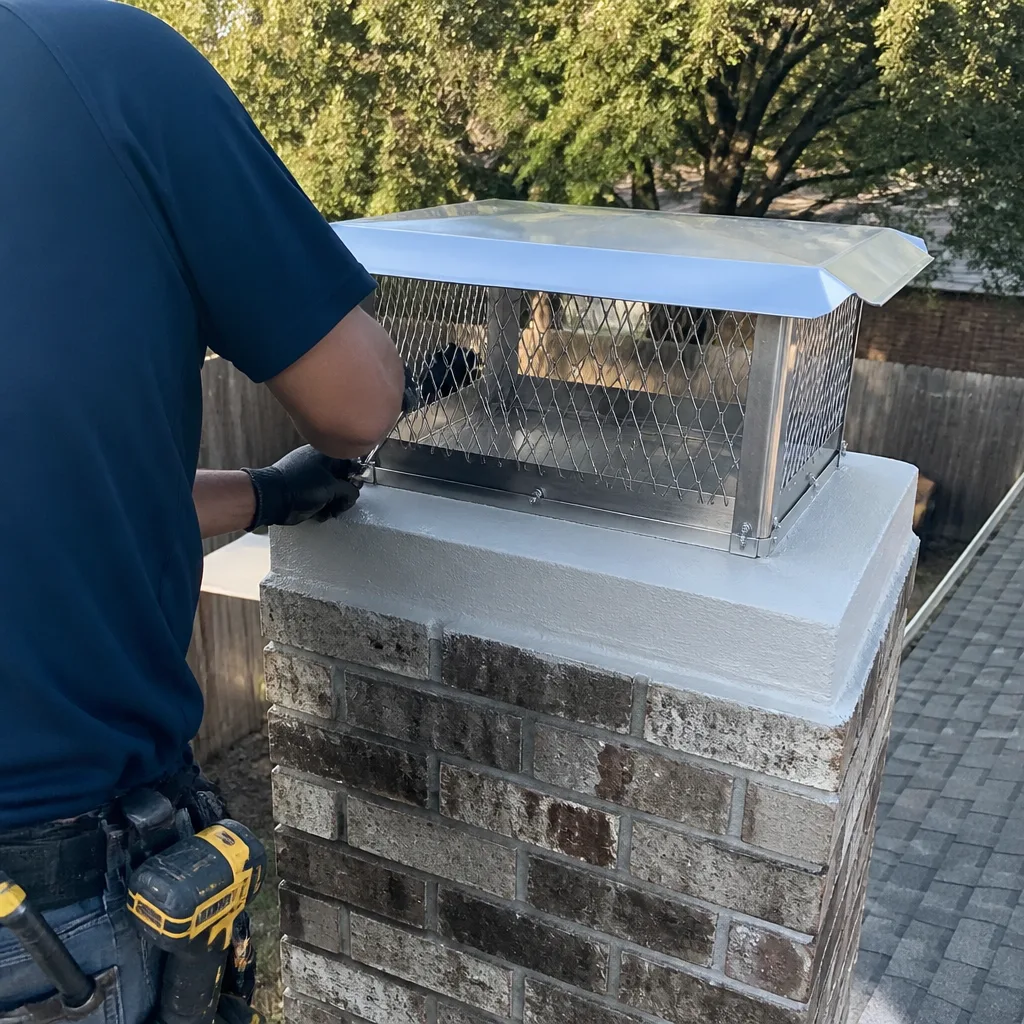
- Chimney cap replacement or installation. If your cap is rusted through or missing, a proper replacement requires matching the cap to the flue tile dimensions and securing it correctly. A poorly attached cap will blow off in the first good San Antonio thunderstorm.
- Anything involving roof access. The pitch on many San Antonio roofs, especially in neighborhoods like Alamo Heights or Terrell Hills where second-story chimneys are common, makes roof work genuinely dangerous without proper equipment.
The guiding principle: if it involves climbing onto the roof or putting a tool inside the flue, call a sweep. If it involves looking, listening, and documenting, you can do that from inside your home or from the ground.
Hadley Chimney San Antonio does exactly this kind of inspection with a camera system that shows you exactly what the tech sees. Our Chimney Sweep in San Antonio service includes photo documentation of every finding, so you’re not taking anyone’s word for it. You’re looking at the same image the tech is looking at.
The Phone Camera Inspection: Cap, Crown, and Flashing
Your phone camera is the most underrated chimney maintenance tool you own. From the ground, with a zoom lens, you can capture meaningful evidence of chimney cap condition, crown integrity, and flashing wear. Here’s what to photograph and what to look for in each image.
The chimney cap. Stand in a position where you can see the top of the chimney, then zoom in with your phone’s camera and take several photos from slightly different angles. What you’re looking for: rust staining on the cap, missing or bent spark arrestor screens, or a cap that’s visibly tilted or shifted. A chimney cap that’s rusted through at the base is no longer doing its job. That means rain is getting directly into the flue, which accelerates liner deterioration and can eventually cause water damage to the firebox.
The crown. The crown is the concrete slab that tops the chimney, sloping away from the flue to shed water. In your zoomed photo, look for cracks running across the surface, pieces of concrete that have actually broken away, or areas where the crown has visibly sunk. In San Antonio, the freeze-thaw cycles in winter are mild, but the summer heat is not. Concrete expands and contracts constantly through a 100-degree summer, and that thermal cycling causes hairline cracks to widen over time. A cracked crown lets water soak into the chimney chase, which is the framed enclosure around the flue. You won’t see that water damage from the outside, but you’ll eventually see the consequences: water stains on interior ceilings near the chimney, or efflorescence on the exterior brick.
The flashing. Flashing is the metal material that seals the joint where the chimney meets the roof. It’s notoriously vulnerable to wind-driven rain, which San Antonio gets during severe thunderstorm season. From the ground, photograph the area where the chimney meets the roofline from every side you can see. Look for lifted flashing edges, visible gaps, or rusted-through sections. If you see any of those, water is almost certainly getting under the flashing and into the roof deck.
Store these photos in a dedicated folder on your phone or in your chimney tracker document. When you book a sweep, share them. They give the tech a head start on knowing what to look for, and they give you a baseline to compare against next year. If a crack widens between one photo and the next, you’ll catch it early instead of discovering it after a leak has already damaged the ceiling.
At Hadley, we document everything on our end too. Every visit includes before-and-after photos as part of The Relay Visibility Guarantee, so you’re never operating on faith. You see the same images we see.
The Chimney Tracker: A One-Page Log to Share With Your Sweep
Most chimney problems are slow-moving. They develop over multiple seasons, which means the best detection tool is comparison. A photo from this year isn’t that useful by itself. A photo from this year next to a photo from three years ago is extremely useful. That’s the entire idea behind a chimney tracker.
Here’s a simple format you can recreate in a note app, a Google Doc, or even a physical notebook. The point is consistency, not format.
| Item | Date Checked | Finding | Action Taken | Next Check Due |
|---|---|---|---|---|
| Last professional cleaning | [date] | [what the sweep found] | [what was done] | [date] |
| Last professional inspection | [date] | [liner condition, mortar joint status] | [recommendations] | [date] |
| Chimney cap condition | [date] | [good / rusted / missing screen / tilted] | [replaced / repaired / none] | [date] |
| Liner status | [date] | [intact / cracked / spalling / not inspected] | [resurfaced / replaced / monitoring] | [date] |
| Damper function | [date] | [opens smoothly / sticks / doesn’t seal] | [adjusted / replaced / none] | [date] |
| Moisture evidence (efflorescence, stains) | [date] | [none / minor / spreading] | [monitoring / repair scheduled] | [date] |
When you book a sweep, pull up this tracker and share it. A good chimney tech will appreciate it. It tells them what’s been done, when it was done, and what’s changed since. That’s the difference between a reactive conversation and a proactive one. Instead of “we’ll take a look and see what we find,” the conversation becomes “your liner showed early-stage cracking in 2024, let’s check if that’s progressed.” That’s the kind of specificity that leads to caught-early repairs instead of expensive failures.
Hadley Chimney Sweep serves homeowners throughout San Antonio, and when we show up, we’re showing up with a written price before any work begins. You don’t need to wonder what the visit will cost. You’ll know before we pick up a brush. That’s how Hadley Chimney San Antonio operates on every single job.
San Antonio-Specific Factors: Climate, Creosote, and Code
San Antonio’s climate affects chimneys differently than, say, Boston or Seattle. If you read a generic chimney maintenance guide written by someone in the Northeast, you’ll get advice about freeze-thaw cycles and ice dams instead of The Complete Guide to Chimney Cleaning in San Antonio. That’s not your problem here. Here’s what actually matters in San Antonio, based on what we see across the city every season.
Heat accelerates mortar deterioration. San Antonio regularly hits 95 to 100 degrees in July and August. When chimney masonry heats up to that temperature and then cools down at night, it expands and contracts daily. Over years, that thermal cycling weakens mortar joints. Hairline cracks appear. Water gets in. The process accelerates. This is why chimneys in older San Antonio neighborhoods, places like Monte Vista or King William, often show mortar joint deterioration even when the chimney was never heavily used. It’s not the fires. It’s the sun.
Oak and mesquite burn hot and produce heavy smoke. Most San Antonio homeowners burn oak, and plenty burn mesquite, especially if they’re doing outdoor cooking in a fireplace. Both woods are dense and burn hot, which is good for heat output. But they also produce substantial smoke and can generate creosote quickly, particularly if the fire is ever damped down too aggressively. The key variable is burn temperature. A hot, clean-burning fire produces less creosote than a smoldering one, regardless of what species of wood you’re using.
Thunderstorm season tests flashing. San Antonio gets its heaviest rain in May, June, September, and October. These are often sudden, intense downpours with strong wind. Flashing takes the brunt of that weather. If your flashing is even slightly compromised, a San Antonio thunderstorm will find it. This is why we recommend checking the flashing area after any particularly severe storm, using the phone camera method described above.
Allergies and air quality. San Antonio is one of the worst cities in Texas for seasonal allergies, especially mountain cedar in the winter. If your chimney is pulling outdoor air into your home through a faulty damper or cap, you’re introducing pollen and outdoor allergens directly into your living space. A properly sealed damper and a chimney cap with a good spark arrestor screen both help reduce this.
Local code considerations. San Antonio’s residential code has specific requirements for chimney construction and clearances, and many homes built before current codes were adopted don’t meet those standards. That’s not an automatic violation, but it is a reason to have a professional inspection. If you’re buying an older home in San Antonio, a chimney inspection should be part of your due diligence process. It’s inexpensive relative to what it can reveal.
When we perform a Chimney Repair in San Antonio, we’re looking at all of these local factors. The repair that makes sense for a San Antonio chimney is often different from what a generic guide would suggest. That’s the value of working with a local company that understands the specific conditions here.
What a Chimney Sweep Costs in San Antonio
Transparency about pricing matters. You shouldn’t have to call three different companies and play phone tag just to get a ballpark idea of what a sweep costs. Here are the honest numbers for the San Antonio market.
A standard chimney sweep (Level 1 inspection plus cleaning) typically runs between $150 and $300 for a single-flue fireplace or wood stove. If your home has a multi-flue chimney or if the flue hasn’t been cleaned in more than two years and has heavy creosote buildup, expect to pay toward the higher end, sometimes $350 or more.
A Level 2 inspection, which includes a camera scan of the flue interior and is recommended when you’re buying a home, after a chimney fire, or after a major weather event, typically runs $250 to $450. This is more than a visual check. It’s a structural assessment.
If repairs are needed, common San Antonio costs include:
- Chimney cap replacement: $150 to $400, depending on cap size and material. Our installs use Copperfield chimney caps, which are built to handle South Texas sun and storms.
- Flashing repair: $200 to $600, depending on the extent of the damage and whether the flashing needs full replacement or spot repair.
- Crown repair: $300 to $800 for resurfacing, more if full reconstruction is needed.
- Flue liner replacement: $3,000 to $7,000 for a full stainless steel liner, which is a significant job. We work with DuraFlex flexible liner systems on these installs because they hold up to the thermal cycling San Antonio chimneys experience.
- Smoke chamber parging: $400 to $1,000, depending on chamber size and accessibility.
Every repair Hadley recommends is backed by a written guarantee and a 365-day promise: if it’s not done right, we make it right. That includes a free second visit if the repair fails. You’re not paying for someone to temporarily patch a problem. You’re paying for it to be fixed correctly the first time.
And before anything starts, you’ll have a written price. No surprises at the door. If a repair can safely wait, we’ll tell you that too. Not everything needs to be fixed immediately, and a good chimney company will help you prioritize based on evidence, not urgency marketing.
How Often Should You Actually Sweep?
The standard recommendation from the National Fire Protection Association is that chimneys, fireplaces, and vents should be inspected at least once a year and cleaned as needed. That’s the baseline. But “as needed” depends on how you use your fireplace.
Here’s a practical framework for San Antonio homeowners:
- Occasional users (a few fires per year, mostly December through February): A sweep every other year is usually sufficient, assuming you’re not seeing creosote buildup during your firebox checks. But an annual inspection is still worth doing, even if a full cleaning isn’t required.
- Regular users (fires most winter weekends, occasional fall and spring fires): An annual sweep before the burning season starts, typically October or November, is the right cadence.
- Heavy users (damper is open multiple times per week throughout winter, or you burn a lot of wood): You may need a mid-season sweep in addition to the annual one. Pay attention to what your firebox is telling you. If you’re seeing flaky creosote building up quickly, the answer is more frequent cleaning.
- Gas fireplace users: A gas fireplace still needs annual service. Gas logs don’t produce creosote, but they do produce soot and can develop burner issues. Our Gas Fireplace Repair in San Antonio team handles these, and the service interval is typically once per year before the heating season.
The “50 burns” rule of thumb is also useful. If you track your fires and hit 50 since your last sweep, it’s time. That’s a more precise barometer than the calendar.
One more thing worth saying directly: skipping a sweep doesn’t just mean your chimney is dirty. Creosote is the primary cause of chimney fires, and chimney fires are often slow-burning, undetected events that damage the liner and the surrounding structure. You might not see flames shooting out the top like you see in dramatic videos. You might not see anything at all. Then six months later, a crack in the liner starts leaking heat into the framing, and you have a different kind of problem. The sweep is the cheapest insurance against that silent failure mode.
Common Mistakes to Avoid
- Using a fire without first checking the damper. If the damper is partially closed or stuck, smoke pours back into your living room. The smoke damage is annoying. The creosote buildup inside a dampered flue is worse. Always open the damper fully before lighting a fire, and check it visually on every use.
- Burning unseasoned wood. Green wood, which is wood cut less than six months ago or not properly dried, smokes heavily and produces creosote at an accelerated rate. In San Antonio, where oak is abundant but often not properly seasoned before sale, this is a common issue. Wood should be split, stacked, and dried for at least six to twelve months. If the wood hisses when it burns, it’s too wet.
- Assuming no fires means no maintenance. An unused chimney still collects moisture, still hosts animals if uncapped, and still deteriorates from sun exposure. A chimney that hasn’t been used in years can actually be in worse shape than one that’s used regularly, because the homeowner isn’t looking at it.
- Ignoring a small crack in the crown because it seems cosmetic. That crack is a water entry point. Water is the enemy of masonry chimneys, and in San Antonio’s heat-plus-downpour climate, a small crack can become a major failure in two or three seasons. Small crown cracks can often be repaired inexpensively if caught early.
- Putting off a liner inspection because the chimney “looks fine.” The liner is the critical safety component, and it’s also the part you can’t see from outside. If your home is more than 20 years old and you’ve never had the liner camera-scanned, you’re operating without information. A camera inspection is a few hundred dollars. A liner-related house fire is not.
- Hiring based on lowest price without asking what the price includes. A $99 sweep often means a visual-only check with no camera, no cap inspection, no written report, and a high likelihood of surprise charges once the tech is on site. At Hadley, the price is written before work starts, and it covers what we said it covers. That’s the entire point of our Chimney Sweep in San Antonio service.
See the difference
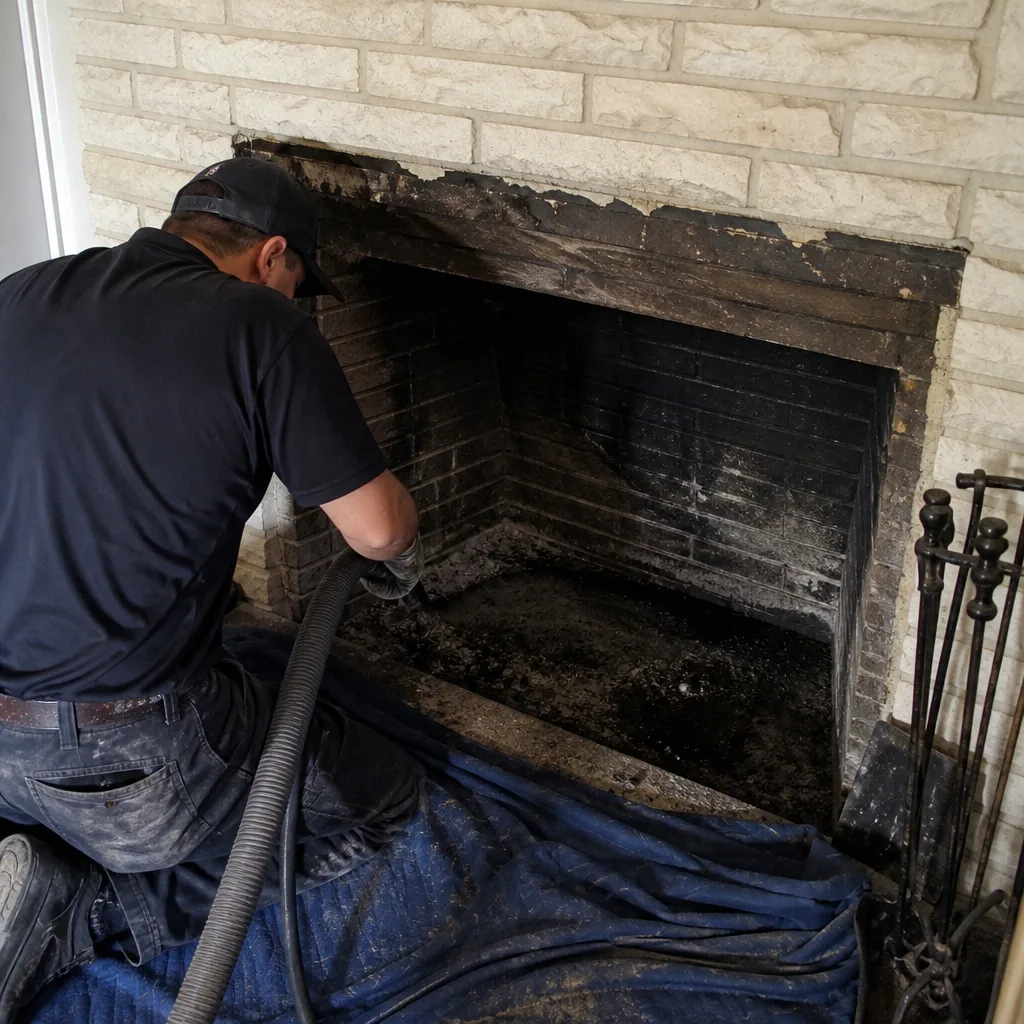 Before
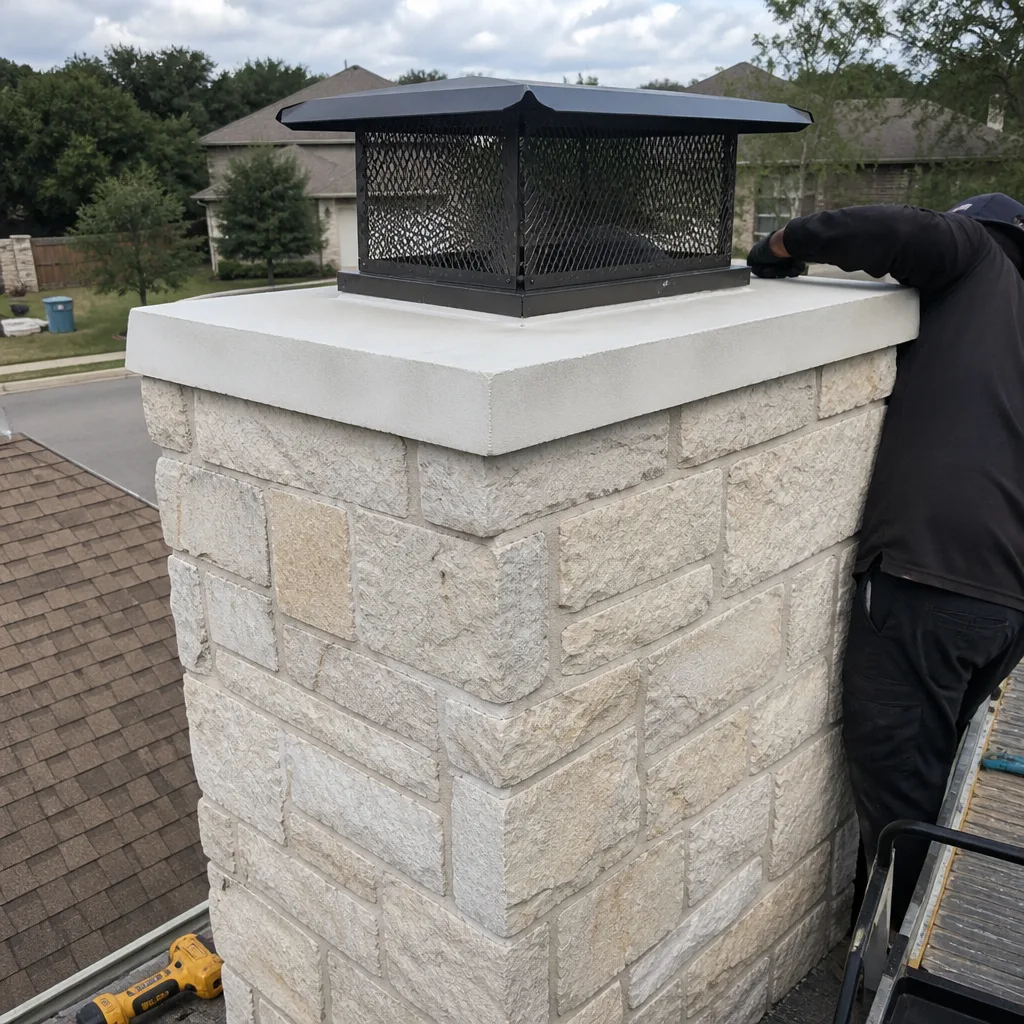 After
After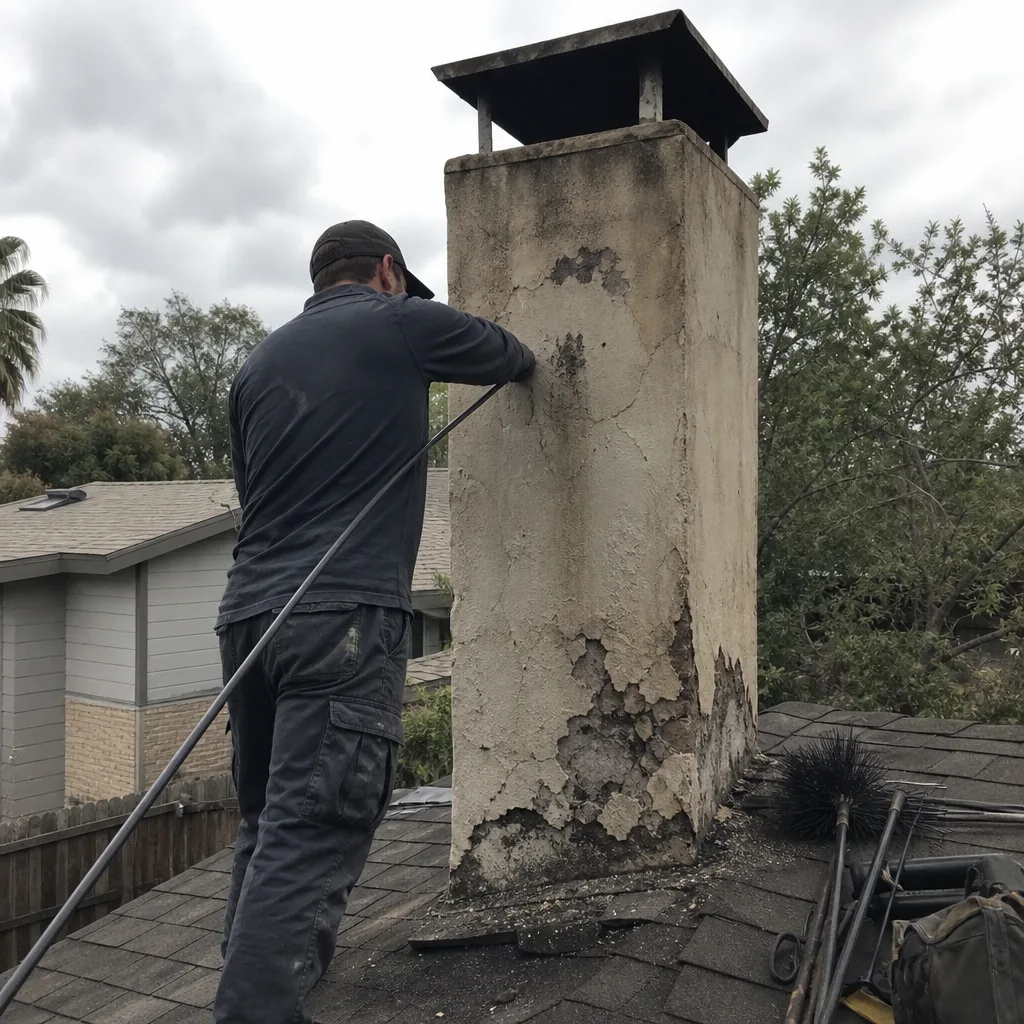 Before
 After
After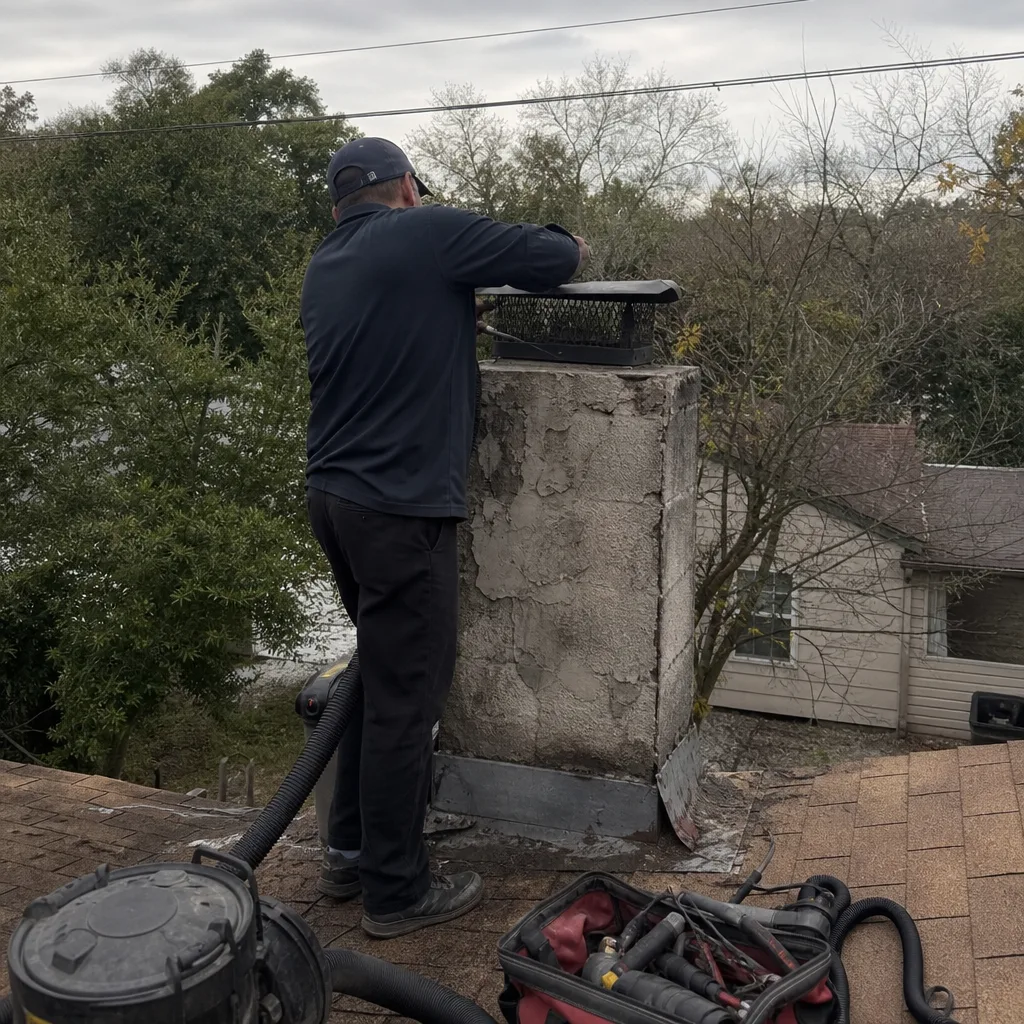 Before
 After
AfterWhen to Call a Professional
Call a professional chimney sweep when you see any of these signals: shiny or flaky creosote buildup thicker than 1/8 inch in the firebox, a damper that doesn’t seal or move smoothly, white efflorescence spreading on exterior brick, visible cracks in the chimney crown, rust staining on the cap, or any sign of water intrusion around the flashing. Also call if you’ve had a chimney fire (even one you didn’t see), if you’re buying or selling a home in San Antonio, or if it’s been more than two years since your last inspection. Hadley Chimney San Antonio offers free estimates and more guides & resources throughout the San Antonio area. Call (254) 276-4116 and a live person answers, 24/7. You’ll get a written price before any work begins, and you’ll see photo documentation of everything we find.
Frequently Asked Questions
A standard chimney sweep in San Antonio typically costs between $150 and $300 for a single-flue fireplace, with most homeowners paying around $200. Multi-flue chimneys, heavy creosote buildup, or homes that haven’t been swept in several years can push that to $350 or more. At Hadley, you’ll get a written price before any work starts, so there’s no ambiguity about what you’re paying. Call (254) 276-4116 for an exact quote.
Most San Antonio homeowners should have their chimney swept once a year, ideally in October or November before the burning season starts. If you use your fireplace heavily, meaning multiple fires per week all winter, you may need a mid-season sweep. If you use it rarely, every other year may be sufficient, but an annual inspection is still recommended regardless of usage.
You need a new liner if a camera inspection shows cracks, gaps, spalling, or deterioration that compromises safety. Not every chimney needs a liner replacement, and a reputable sweep will show you the camera evidence. At Hadley, we don’t recommend liner replacement unless we can show you exactly why it’s needed, and we use DuraFlex and HeatShield systems when replacement or repair is required. If a company recommends a liner replacement without showing you camera proof, get a second opinion.
Skipping maintenance allows creosote to accumulate, which is the primary fuel for chimney fires. Even a slow-burning chimney fire can crack a flue liner, and a cracked liner can leak heat and gases into the home’s structure. Moisture also becomes a problem: uncapped chimneys collect rain, cracked crowns absorb water, and masonry deteriorates. The costs compound from a few hundred dollars for a sweep into thousands for structural repairs, and in the worst case, a house fire.
You can clear loose ash and debris from the firebox yourself with a shop vacuum, and you can perform all of the visual inspections described in this guide. But actual flue cleaning and liner inspection require professional equipment, including rotary brushes sized to your specific flue and camera systems that can see the full liner. Using an improperly sized brush can scratch a stainless steel liner and create new problems. If in doubt, call a professional.
Yes. Hadley Chimney San Antonio, founded in 2003 and led by Cory Mitchell, serves homeowners throughout the San Antonio metro area. Technicians arrive in a tracked window with live arrival updates, and every job includes before-and-after photo documentation and digital invoicing. Call (254) 276-4116 to schedule an estimate.
The Bottom Line
Chimney maintenance in San Antonio isn’t about memorizing a calendar or trusting a vague reminder. It’s about observing evidence. Your firebox tells you about creosote. Your nose tells you about downdrafts. The white stain on your brick tells you about moisture. Your phone camera can capture cap, crown, and flashing condition from the ground. Log it all in a tracker, share it with your sweep, and let the evidence guide the decisions. A professional chimney sweep in San Antonio should cost $150 to $300 and should include a written price before work starts, photo documentation of findings, and an honest answer about what needs fixing now versus what can wait. That’s the standard Hadley Chimney San Antonio operates by, with a 365-day written guarantee on every repair and a live person answering the phone around the clock.
Written by Cory Mitchell, Owner at Hadley Chimney San Antonio, serving San Antonio since 2003.