
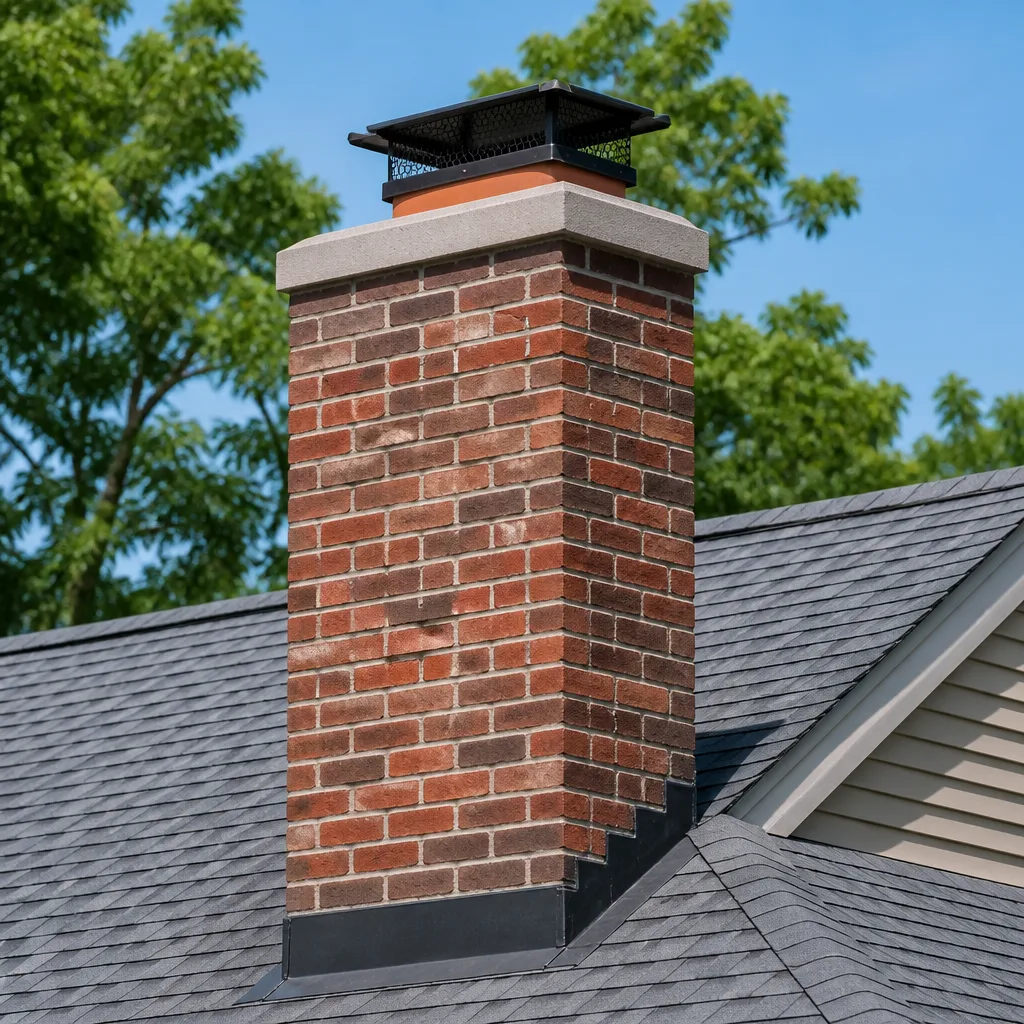
 Masonry repair
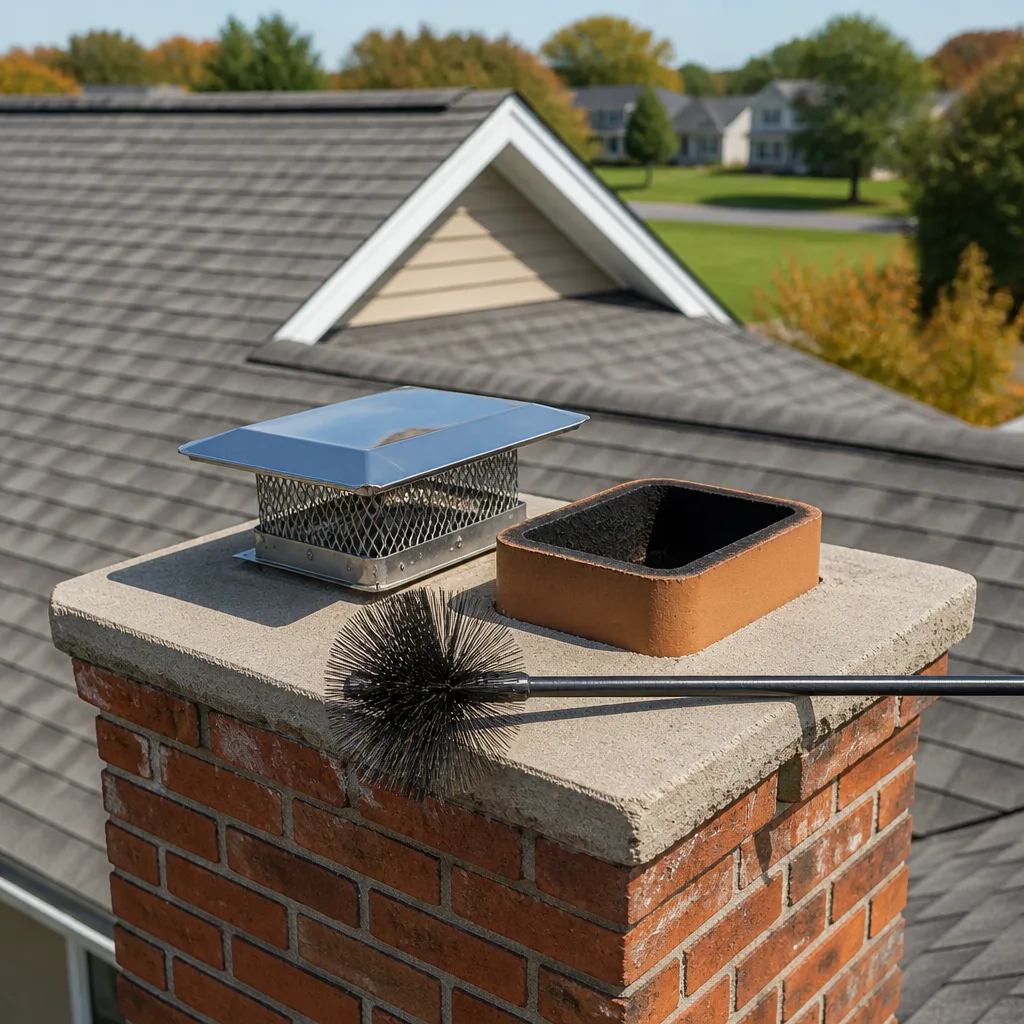 Sweep & inspection
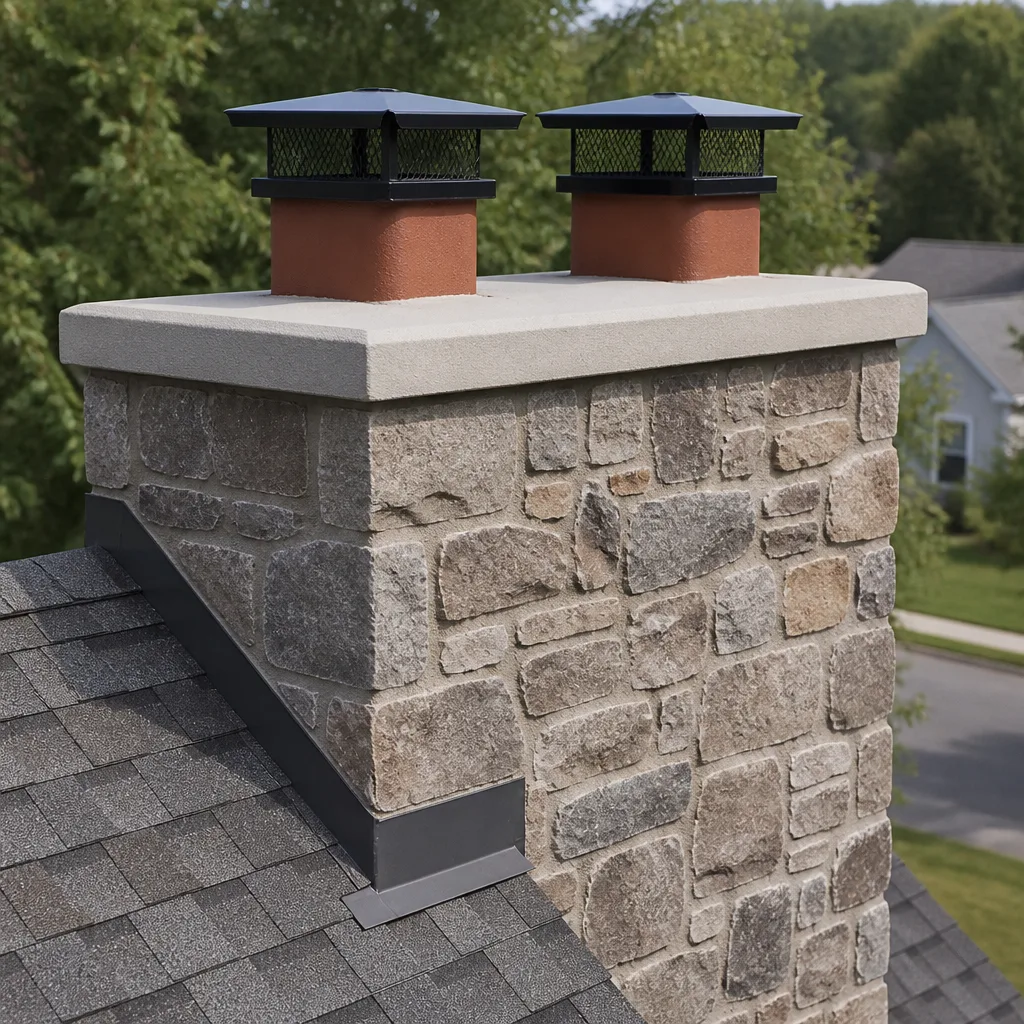 Caps & crowns
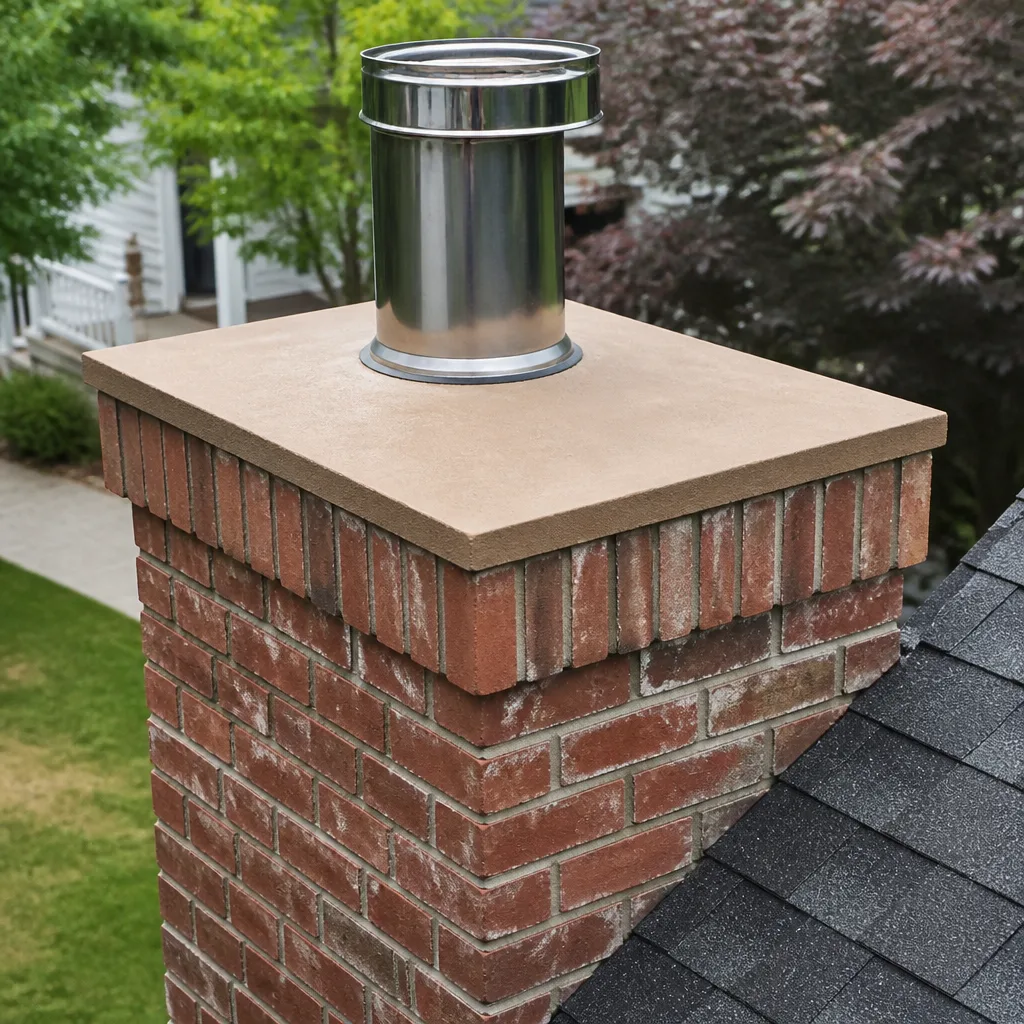 Flue relining
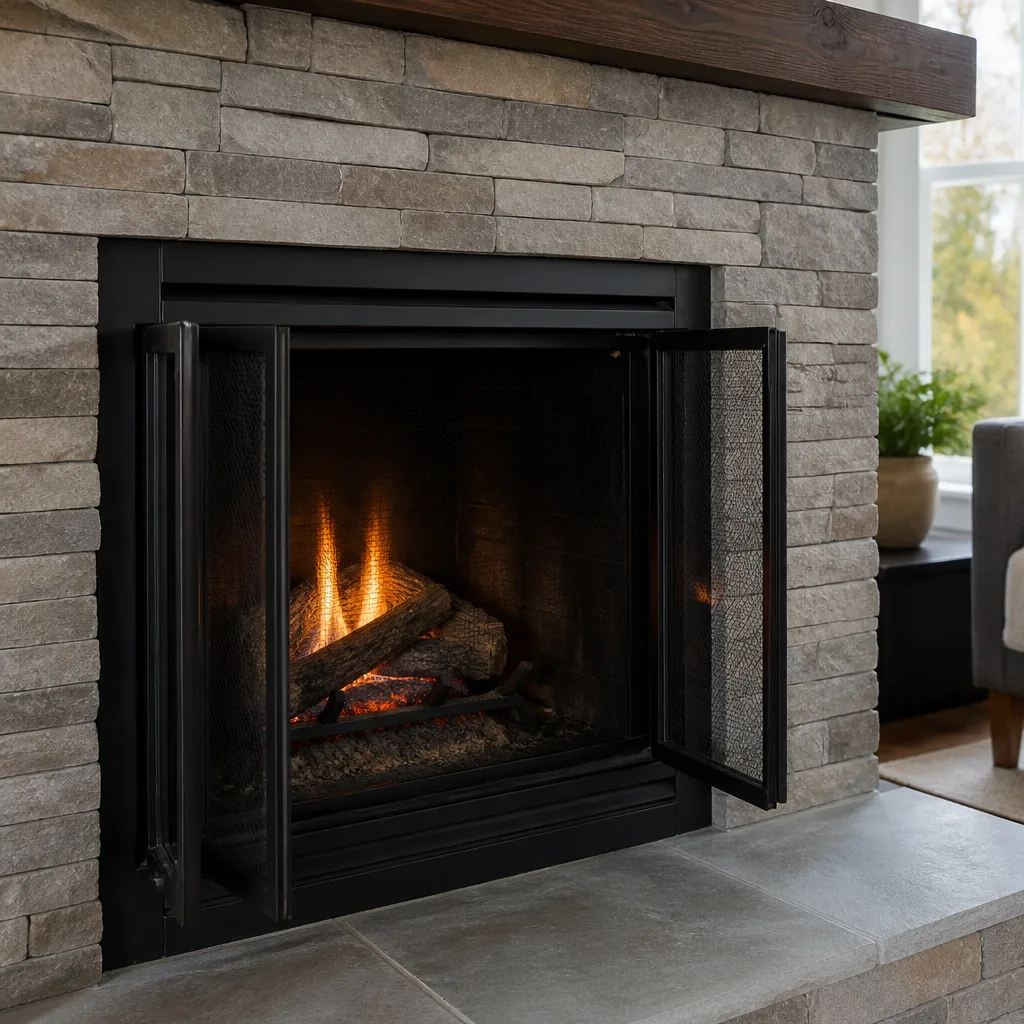 Gas fireplace service
Level 1 sweep and inspection to the NFPA 211 annual standard - flue, crown, cap, and flashing checked and photographed
Chimney sweep logs do not sweep chimneys. They loosen some creosote - which then falls where a brush and vacuum still have to collect it.
Olympia Chimney Crown Repair: The San Antonio Owner’s Guide
We stock Olympia Chimney-compatible crown repair materials on our trucks and install them across San Antonio, typically for $425 – $850 depending on crown condition, chimney access, and whether we’re doing a full tear-off and recast or a sealed repair over stable concrete. Most owners discover a failing crown the hard way: a water stain on the ceiling near the fireplace, efflorescence (that white chalky mineral bloom) on the brick face, or spalling (chunks of concrete flaking off the crown edge after a hard rain). The crown is the concrete or mortar cap that sits on top of the chimney, sealing the flue opening from weather, and in San Antonio’s freeze-thaw cycles plus hundred-degree summers, crowns crack faster than most homeowners expect. Here’s exactly what we look at, what it costs, and when it’s safe to wait.
Which Olympia Chimney Models This Applies To
Olympia Chimney manufactures prefabricated chimney systems and stainless steel liners more than standalone masonry crowns, which means crown failure on an Olympia Chimney product usually happens at the chase top (the metal lid covering a wood-framed chimney chase around the factory-built flue) or at the termination cap mounting surface where the flue exits. The crown repair we do on Olympia Chimney systems is typically the poured concrete crown surrounding the anchor plate or the chase cover replacement and weather-sealing where the cap attaches to the crown.
The compatibility gotcha most owners run into: Olympia Chimney flue sections measure slightly differently than generic brand flues, so the anchor plate and storm collar tolerances matter. If you’re replacing a crown around an Olympia Chimney flue, the outside diameter needs to match the anchor plate exactly, not “close enough,” or water finds the gap. We measure the flue OD and compare against the Olympia Chimney spec before ordering any anchor or collar, and we’ll show you that measurement in the photo report before we cut anything. On the OEM-versus-aftermarket question: for crowns, the poured mortar or concrete work is service, not part, so OEM doesn’t apply the same way it does for liners or caps. But the flashing, storm collars, and caps that sit on top of or against that crown should be Olympia Chimney-compatible or gear-matched quality aftermarket from brands like DuraFlex or Gelco when we’re restoring a chase-top system. Hadley Chimney San Antonio is an independent service provider, not affiliated with Olympia Chimney, and we stock a range of compatible parts so you’re not waiting on a factory lead time.
Styles & brands we work with
Signs Your Olympia Chimney Crown Repair Is Failing
These are the symptoms our techs look for most often around San Antonio, from Alamo Heights to Stone Oak:
- Spalling or chipped concrete at the crown edge. Water seeps into hairline cracks, freezes on cold January nights, and expands, popping off small chunks. Each chip leaves more surface area for the next rain cycle to exploit, and Texas sun bakes the exposed aggregate until it crumbles.
- White mineral deposits (efflorescence) on the brick or siding below the crown line. Moisture carries salts through the masonry, and as the water evaporates, the salts crystallize on the surface. It looks like the chimney is shedding a fine white powder, and it tells you water is moving through the crown or the flue chase from the top down.
- Water staining on the ceiling or drywall near the fireplace after a heavy rain. A cracked crown lets water run down the outside of the flue and pool at the firebox or chase, then travel sideways into framing. By the time the stain shows inside, the crown has usually been compromised for months or longer.
- Rust streaks on the chimney cap, storm collar, or chase cover. San Antonio’s humidity plus trapped water accelerates rust, and the cap or collar is usually the first place you’ll see it. Rust on those components means the crown underneath isn’t shedding water anymore, or the chase cover is holding moisture against the metal.
- Damp or musty odor in the firebox during summer. That smell is trapped moisture and organic buildup cooking slowly inside the flue. It’s more common with prefab Olympia Chimney systems where the chase box is enclosed and doesn’t breathe.
See the difference
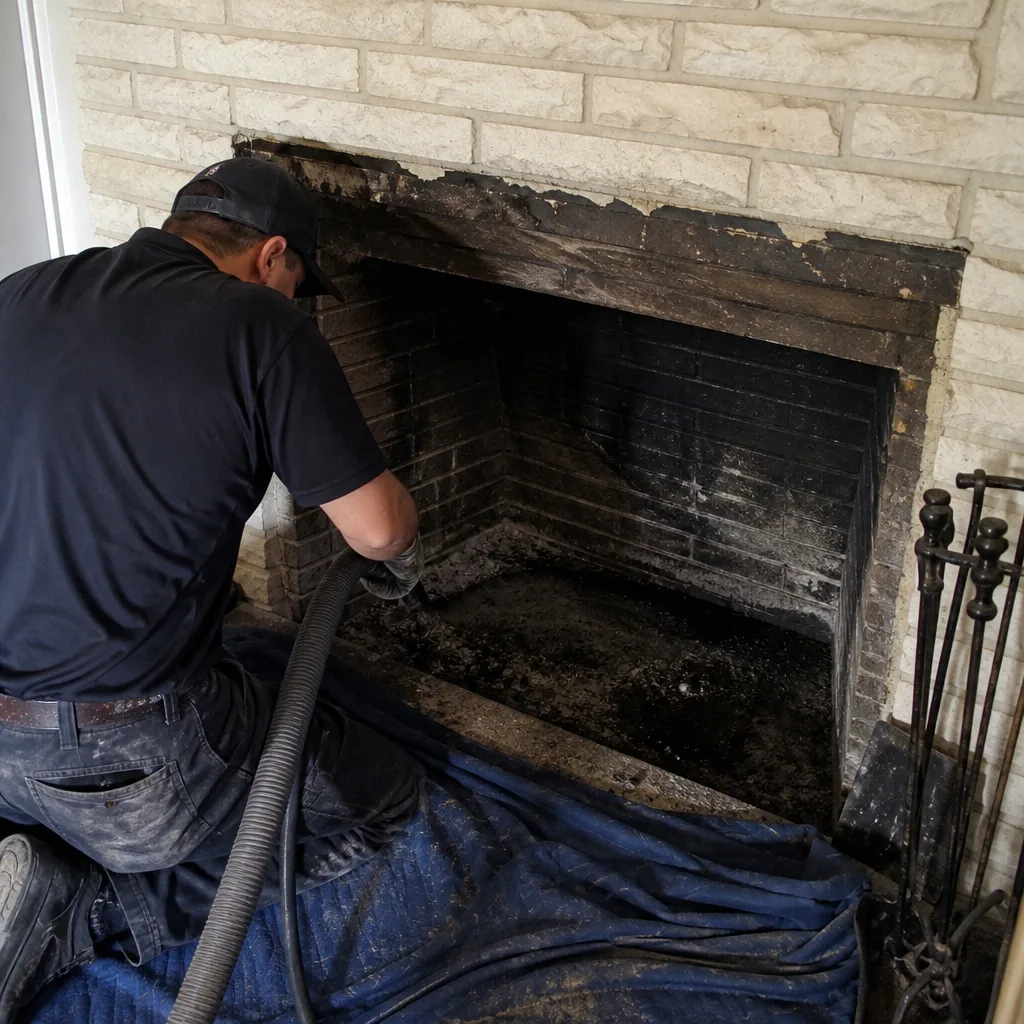 Before
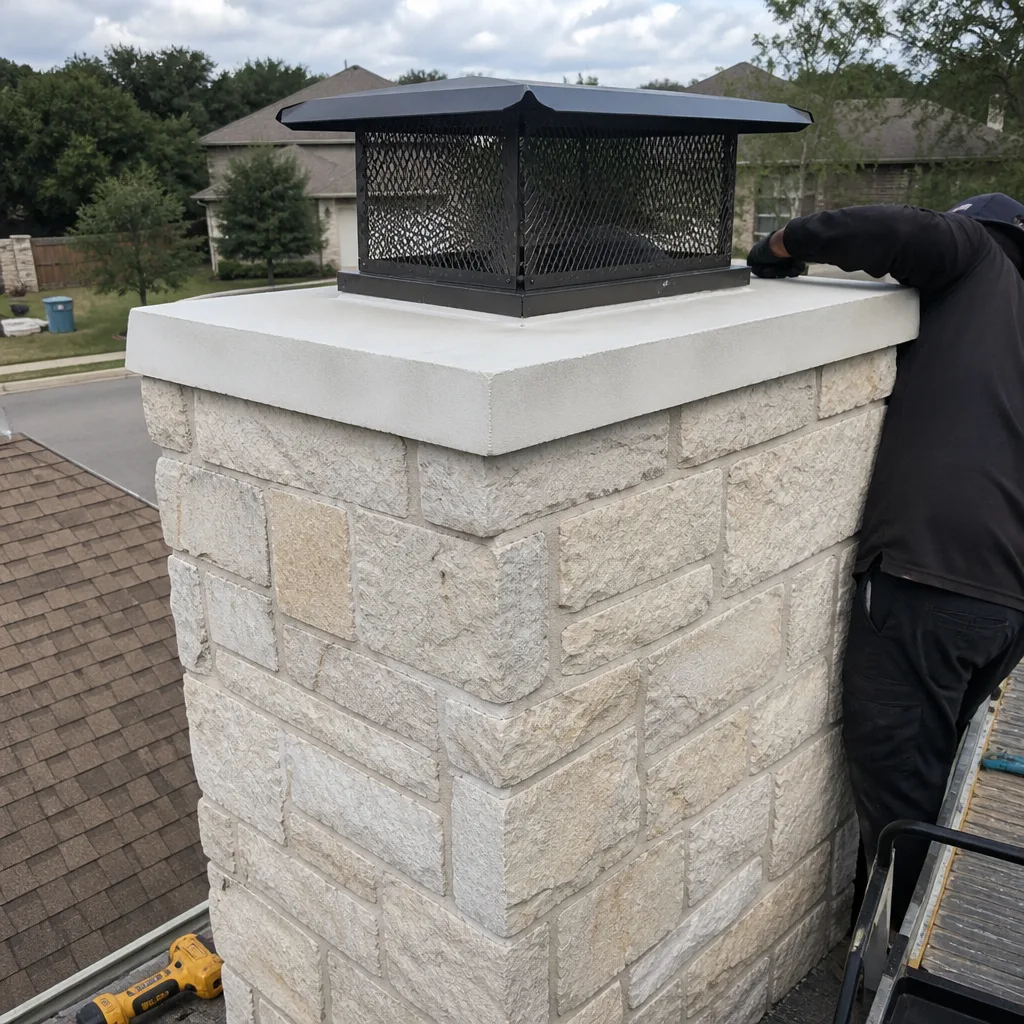 After
After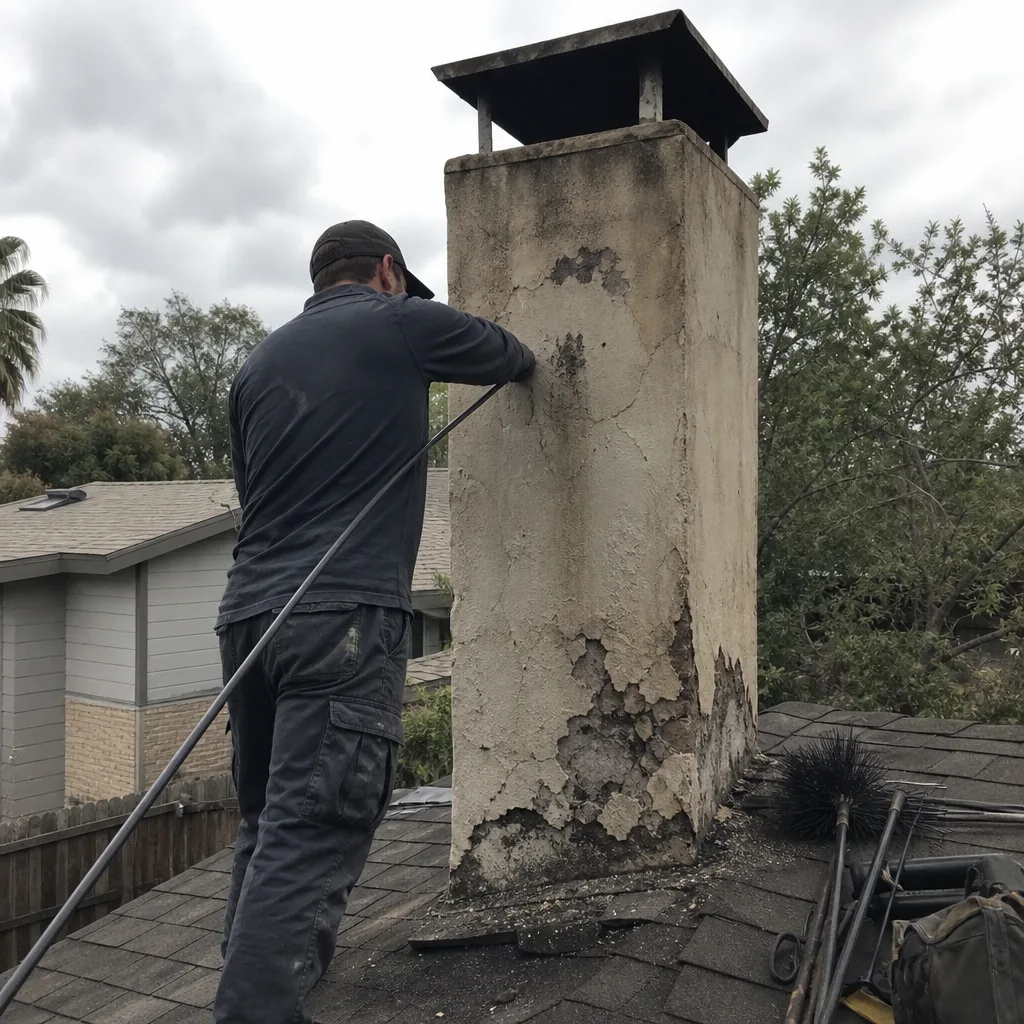 Before
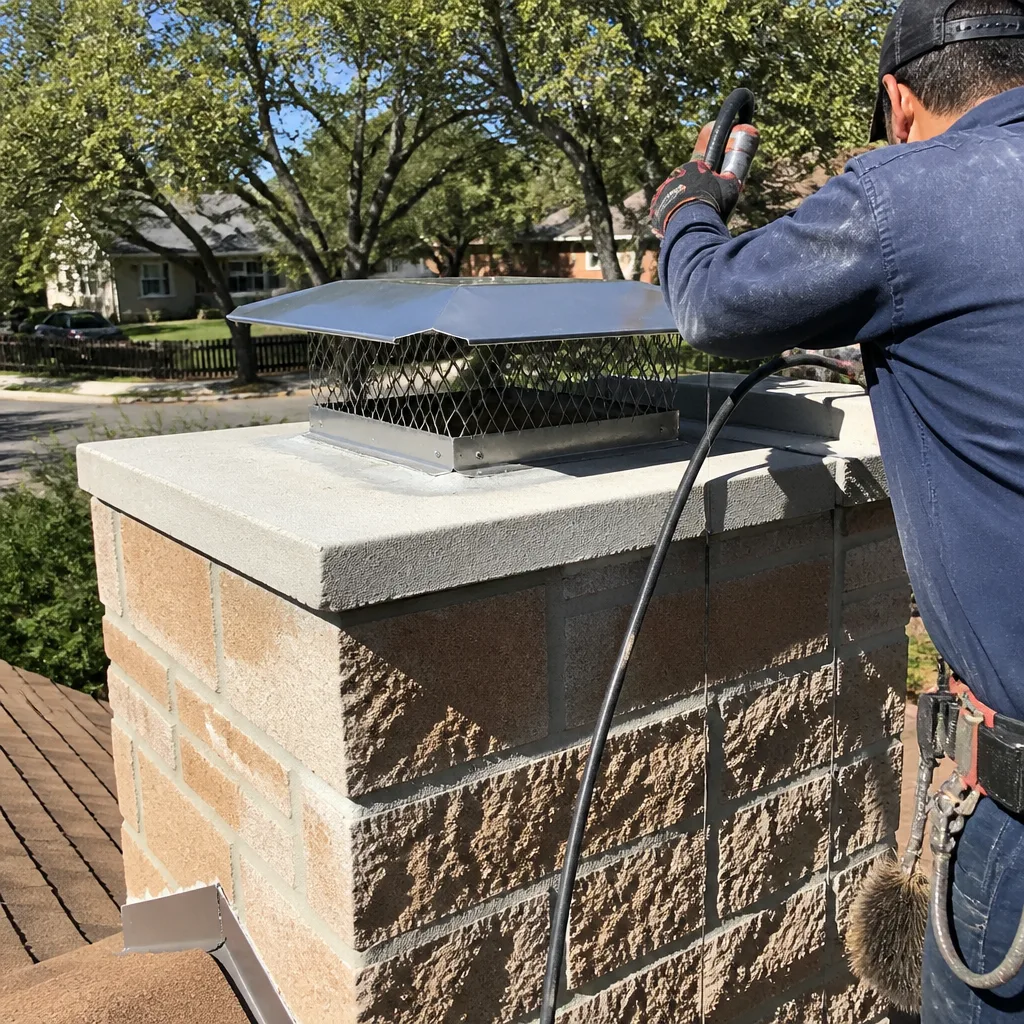 After
After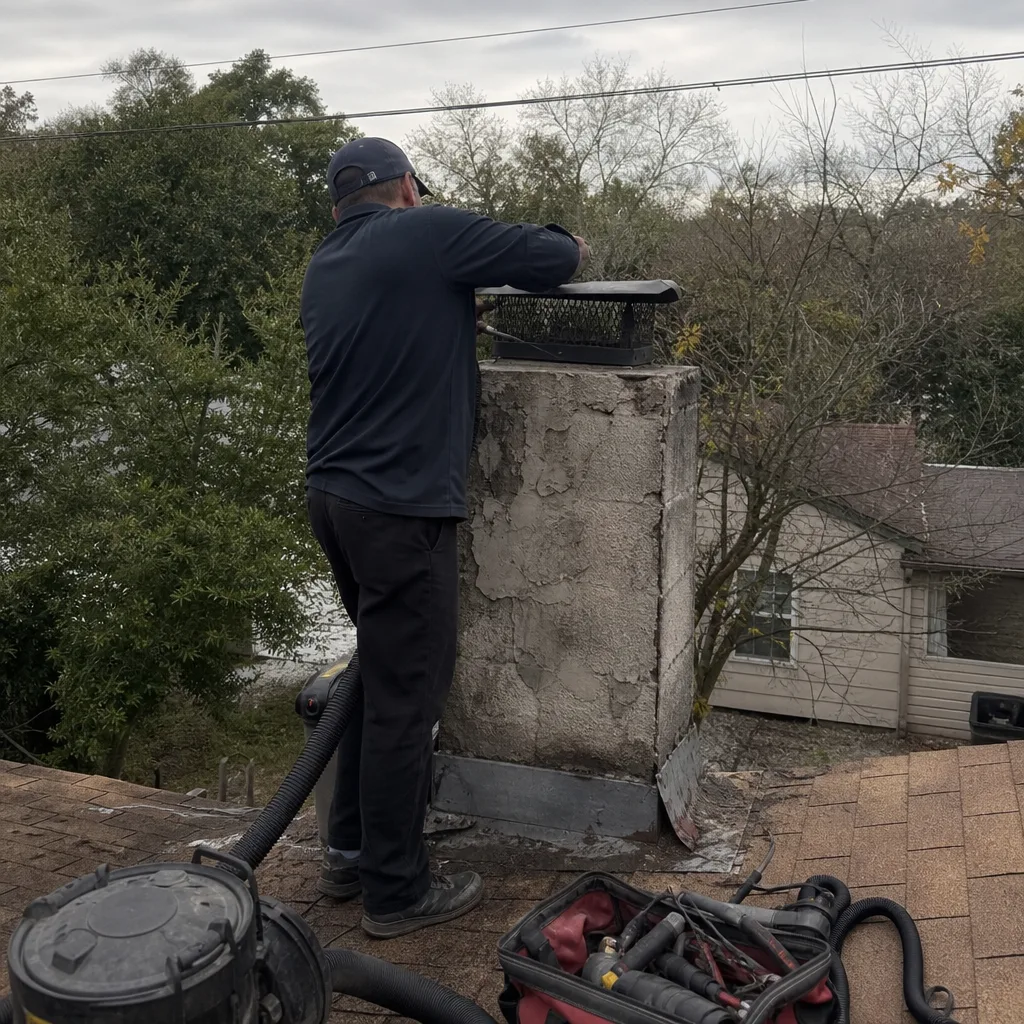 Before
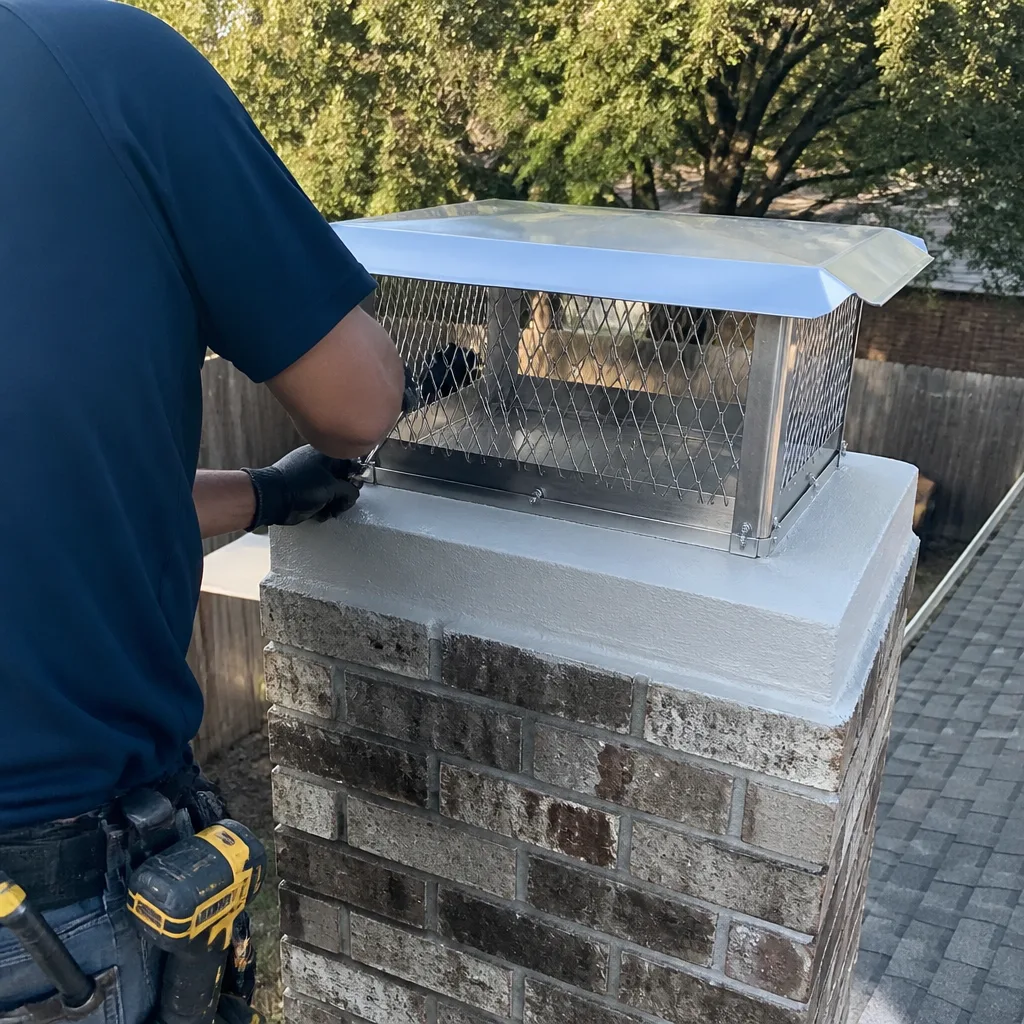 After
AfterReplacement Cost & What’s Included
A crown repair or replacement around San Antonio typically runs $425 – $850 installed, depending on whether we’re sealing hairline cracks with an elastomeric crown coat or doing a full tear-off and recast with a proper overhang and drip edge. Full crown rebuilds on larger or double-flue chimneys can push toward $1,000 if the masonry needs significant patching first. Here’s the line-item view so nothing’s a mystery:
| Work scope | Typical installed cost |
|---|---|
| Crown sealing (crack fill + elastomeric coat) | $425 – $550 |
| Crown recast, single flue | $550 – $750 |
| Crown recast plus chase cover and storm collar replacement | $700 – $950 |
| Full crown rebuild with flue tile reset | $850 – $1,100 |
Every quote is written down before any work starts. You’ll see the parts cost, the labor, and the exact warranty terms in writing. And every crown repair carries our 365-Day Done Right Promise: if the repair fails in the first year, we come back and make it right at no charge.
DIY or Call Us?
You can safely check a crown from the ground with binoculars: look for cracks wider than a dime, chipped edges, or a crown that sits flush with the brick instead of overhanging it by at least two inches. That overhang is what keeps water from running straight down the masonry face, and if it’s missing, that’s the first thing we fix.
What we don’t recommend DIY: sealing or recasting a crown from a ladder or roof. Crown work means working at the highest point of the chimney, often on a sloped surface, with wet mortar or sealant in your hands. Falls from roof-height work are one of the most common and most serious home-maintenance injuries, and crown sealing done incorrectly traps moisture instead of shedding it, which speeds up the exact damage you’re trying to stop. If you want to see the condition we’re talking about before committing, call (254) 276-4116. We’ll send photos of your actual crown from the roof before quoting a dollar.
FAQs
A properly recast crown with a correct overhang and flexible sealant typically lasts 10 to 15 years in San Antonio’s climate, while a sealed repair over stable concrete usually lasts 5 to 8 years before it needs another coat. The sun and occasional freeze cycle are the big wear factors here, and our 365-Day Done Right Promise covers the first year in writing if anything fails.
Yes, if the crown is mostly intact with hairline cracks and no spalling, we can fill and seal it with an elastomeric crown coat, which runs $425 – $550. If the concrete is crumbling, flaking, or missing its overhang, a recast is the honest fix and costs $550 – $750. We’ll show you photos of the difference before you decide.
Most crown repairs and recasts are completed in one visit, usually 2 to 4 hours depending on whether we’re sealing or recasting and how much old masonry needs removal. The largest variable is flue access on steep San Antonio roof pitches, but we’ll tell you the expected time window in writing when we book.
We keep elastomeric crown sealant, mortar mixes, flashing, storm collars, and compatible caps on our trucks, and we source Olympia Chimney-compatible anchor plates and termination components as needed. If your repair requires a part we don’t have on hand, we’ll give you the exact lead time and price before ordering, not after the fact.
Written by Cory Mitchell, Owner, Hadley Chimney San Antonio at Hadley Chimney San Antonio, serving San Antonio and nearby areas.